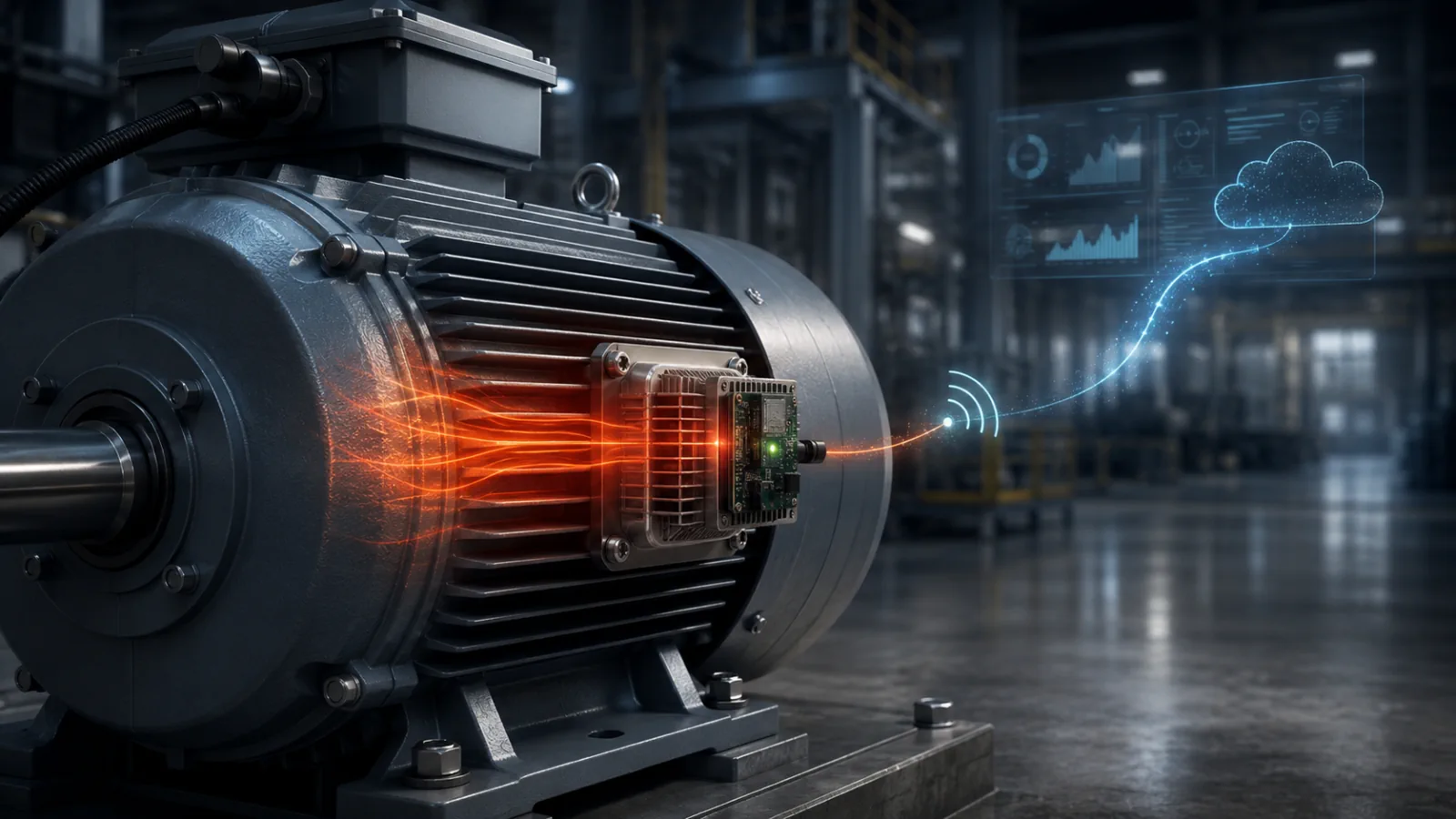
Bluetooth Channel Sounding is one of the most interesting Bluetooth LE evolutions for teams building IoT devices, embedded systems, smart access products, asset trackers, wearables and industrial devices that need to estimate the distance between two devices more reliably than classic RSSI. Introduced with Bluetooth Core 6.0 and further improved with Bluetooth Core 6.3, Channel Sounding brings a standardized ranging capability into the Bluetooth ecosystem.
The important question is not only "what is Bluetooth Channel Sounding?". For an embedded team, the better question is: does my product only need to know that a device is nearby, or does it need to know how close it is with a more robust, secure and repeatable measurement?
For years, many Bluetooth applications estimated proximity with RSSI, the received signal strength indicator. It is simple, but it is highly sensitive to obstacles, reflections, antenna orientation, the human body, enclosure design, interference and multipath. Bluetooth Channel Sounding was created to move beyond that limitation by using more advanced radio techniques such as Phase-Based Ranging and Round-Trip Timing.
What Bluetooth Channel Sounding is
Bluetooth Channel Sounding is a Bluetooth LE feature that allows two compatible devices to exchange radio signals and derive information that can be used to estimate the distance between them. It was introduced with Bluetooth Core 6.0 and creates a new standardized foundation for secure ranging, localization, intelligent proximity and distance-aware applications.
A Channel Sounding procedure has two main roles: an Initiator, which starts the measurement, and a Reflector, which responds. The two devices perform a sequence of radio exchanges across multiple Bluetooth LE physical channels. From the collected data, the stack and the application can calculate or estimate distance.
The technology is mainly based on two methods:
- Phase-Based Ranging, which uses phase variation across multiple radio frequencies.
- Round-Trip Timing, which uses the time needed for a signal to travel from one device to the other and back.
The key point is that Channel Sounding is not just a proprietary algorithm layered on top of Bluetooth. It is a standardized Bluetooth specification feature designed to improve interoperability, security and commercial adoption.
Why Bluetooth Channel Sounding matters for IoT, embedded and firmware
In embedded systems, distance can become a system variable. A device may decide whether to unlock a function, enable access, change its operating state, wake from low power, send an alarm or switch mode based on the real distance from another device.
This is very different from simply detecting that a BLE device is somewhere nearby. In many products, generic proximity is not enough. The system needs to know whether the user is really in front of the machine, whether a digital key is physically close to the door, whether an asset is in the correct zone, whether an operator is inside an authorized area or whether a tag is close enough to a gateway.
Bluetooth Channel Sounding is compelling because it brings this capability into the Bluetooth LE ecosystem, which is already widely used in smartphones, tags, sensors, wearables, gateways and industrial devices. For an embedded designer, this can mean adding ranging features without necessarily introducing a separate technology such as UWB in every product.
The main advantage: more reliable distance than RSSI
The historical limitation of Bluetooth proximity is RSSI. Signal strength can provide a general indication, but it is not a stable distance measurement. Two devices at the same distance can report different RSSI values because of antenna design, the user's hand, walls, metallic objects, reflections and radio noise.
Channel Sounding changes the approach. It does not only look at how strong the signal is; it analyzes radio properties that are better suited to distance estimation. This makes it possible to build more robust applications for secure access, indoor localization, asset tracking and distance-aware devices.
The value is not only technical. It is also a product value: a system that understands distance better can provide a more natural user experience, reduce false positives, improve security and enable new commercial features.
Bluetooth Core 6.0 and Bluetooth Core 6.3: why they matter
Bluetooth Core 6.0 introduced Channel Sounding as a key feature for measuring distance between Bluetooth LE devices. It is the technical foundation for standardized secure fine ranging applications.
Bluetooth Core 6.3 refines the picture further. According to the Bluetooth SIG, version 6.3 introduces targeted improvements for precision ranging, expands HCI interface capabilities and improves some radio aspects. For Channel Sounding, the improvements related to PHY-specific RTT Accuracy are especially relevant because they allow more specific RTT accuracy parameters based on the PHY in use.
For teams developing embedded products, this means that reading "Bluetooth 6.x support" on a datasheet is not enough. You need to verify which Bluetooth features are actually supported by the SoC, stack, SDK, controller, host and development tools.
Practical applications of Bluetooth Channel Sounding
Digital keys and secure access
One of the clearest scenarios is digital keys. Cars, smart locks, industrial cabinets, machines, technical rooms and professional devices can use Channel Sounding to verify that the authorized device is physically close.
This matters because a simple Bluetooth connection does not always guarantee reliable physical proximity. An access system should know whether the user is in front of the door or machine, not only whether the smartphone can be reached over radio.
Indoor asset tracking
In warehouses, workshops, hospitals, laboratories, construction sites and production environments, knowing where an asset is located can have immediate operational value. Bluetooth tags, gateways and anchors can be used to locate tools, carts, equipment, medical devices or critical components.
With RSSI, indoor localization can be unstable. Channel Sounding offers a stronger basis for estimating distance between tags and anchors, improving reliability compared with systems based only on signal strength.
Smart proximity for IoT devices
An IoT product can change behavior based on its distance from a smartphone, gateway or another node. For example, it can activate an interface only when the operator is nearby, enable local configuration, increase transmission frequency, wake from low power or show advanced functions.
Find-my devices and personal objects
Bluetooth Channel Sounding can improve object-finding devices such as trackers, tags, remote controls, earbuds, wearables and accessories. In these cases, distance measurement can make the user experience more natural: not only "the device is nearby", but "you are getting closer" or "you are in the right area".
Industry, maintenance and operational safety
In industrial contexts, distance can become a safety or process requirement. A machine may allow certain operations only when the authorized technician is physically close. A gateway may validate the presence of a tag on an asset. A maintenance system may automatically associate logs and configuration with the device that is actually in front of the operator.
Nordic, NXP and Silicon Labs: the ecosystem is moving
Nordic Semiconductor
Nordic Semiconductor supports Channel Sounding in the nRF54 family. Nordic's official page indicates support for the nRF54L Series, with qualified Bluetooth host and controller support available in nRF Connect SDK from version 3.0.1 onward.
NXP
NXP documents Bluetooth Channel Sounding for the KW47 and MCX W72 families. NXP's documentation includes technical material on Channel Sounding fundamentals, custom applications and MCUXpresso SDK support.
Silicon Labs
Silicon Labs integrates Channel Sounding into its Bluetooth ecosystem and provides documentation, software examples for Initiator and Reflector roles, and an RTL reference library for distance estimation.
Typical architecture of an embedded Bluetooth Channel Sounding solution
| Component | Role | Embedded impact |
|---|---|---|
| Bluetooth LE SoC with Channel Sounding | Runs the radio ranging procedures | Affects BOM, power consumption, SDK, feature availability and Bluetooth qualification |
| Bluetooth stack | Manages Initiator, Reflector, HCI, Link Layer and CS procedures | Must actually support Channel Sounding, not only generic Bluetooth LE |
| Antenna and RF layout | Determine signal quality and measurement stability | Multipath, polarization, enclosure and ground plane can change the result |
| Distance algorithm | Turns radio data into a usable estimate | Requires filtering, calibration, validation and outlier handling |
| Application firmware | Uses distance to make decisions | Must define thresholds, states, fallback paths, timeouts, safety logic and UX |
| Security | Protects identity, pairing, data and access decisions | Critical for smart locks, automotive, access control and industrial machines |
| Testing and validation | Verify distance, repeatability and field behavior | Must include obstacles, movement, interference, angles, multipath and edge cases |
Channel Sounding, RSSI, AoA/AoD and UWB: practical differences
| Technology | When it makes sense | Main limitation |
|---|---|---|
| Bluetooth RSSI | Simple proximity, beacons, generic presence, minimum cost | Very sensitive to environment, human body, obstacles and multipath |
| Bluetooth AoA/AoD | Localization based on angle of arrival or departure with dedicated infrastructure | Requires antenna arrays, more complex infrastructure and calibration |
| Bluetooth Channel Sounding | Distance between BLE devices, secure access, tracking, smart proximity | Requires compatible hardware, stack and SDK, plus careful RF validation |
| UWB | Very precise ranging, advanced digital keys, high-accuracy RTLS | Cost, power consumption, integration and hardware availability outside Bluetooth |
| GNSS | Outdoor tracking, logistics, vehicles, mobile assets | Not suited to precise indoor localization and often more power hungry |
Technical checklist for evaluating Bluetooth Channel Sounding
bluetooth_channel_sounding_audit:
  product_fit:
    distance_is_really_needed: true
    rssi_limitations_identified: true
    uwb_vs_channel_sounding_compared: true
    smartphone_support_required_checked: true
  hardware:
    cs_capable_soc_available: true
    dev_kit_selected: true
    antenna_strategy_defined: true
    enclosure_impact_considered: true
    power_budget_estimated: true
  software:
    sdk_support_verified: true
    initiator_reflector_examples_available: true
    ranging_algorithm_plan_defined: true
    application_thresholds_defined: true
    diagnostics_and_logs_planned: true
  security:
    pairing_model_defined: true
    device_identity_model_defined: true
    secure_boot_required: true
    signed_ota_required: true
    debug_access_policy_defined: true
  validation:
    lab_test_plan_available: true
    field_test_plan_available: true
    multipath_scenarios_defined: true
    movement_scenarios_defined: true
    acceptance_criteria_defined: true
Recommended adoption mini plan
flowchart TD
  A["Use-case analysis"] --> B["Compare RSSI, Channel Sounding, AoA/AoD, UWB and GNSS"]
  B --> C["Select SoC, SDK and development kit"]
  C --> D["PoC Initiator/Reflector on real hardware"]
  D --> E["Measure distance, power, stability and multipath"]
  E --> F["Integrate firmware, security, OTA and diagnostics"]
  F --> G["Test with final enclosure and real scenarios"]
  G --> H["Bluetooth qualification, certification and controlled rollout"]
FAQ about Bluetooth Channel Sounding and embedded systems
Does Bluetooth Channel Sounding replace RSSI?
Not always. RSSI is still useful for generic presence, simple beacons and applications where reliable distance measurement is not required. Channel Sounding becomes more interesting when distance affects security, access, localization or application logic.
Does Channel Sounding replace UWB?
No. UWB remains very strong for high-precision ranging and advanced localization. Channel Sounding is interesting because it brings distance awareness into the Bluetooth LE ecosystem, potentially with lower complexity in many products.
Does it require new hardware?
In many cases, yes. A generic Bluetooth LE device is not enough. You need SoCs, controllers, stacks and SDKs that actually support Bluetooth Channel Sounding.
Is it suitable for battery-powered devices?
It can be, but it has to be measured. Power consumption depends on measurement frequency, number of peers, radio power, antenna quality, firmware, sleep modes and application logic.
Is it useful for secure access?
Yes, it is one of the most interesting use cases. However, it must be integrated with authentication, key management, secure boot, signed OTA, logging and safe fallback behavior. Distance alone is not enough.
Is it already supported by chip vendors?
Yes. Nordic supports Channel Sounding on the nRF54L Series through nRF Connect SDK, NXP documents it for KW47 and MCX W72, and Silicon Labs provides documentation, examples and RTL libraries for ranging applications.
Useful technical references
- Bluetooth SIG - Bluetooth Core 6.0 feature overview and Channel Sounding introduction
- Bluetooth SIG - official overview of Bluetooth Channel Sounding
- Bluetooth SIG - Bluetooth Core 6.3 technical overview and Channel Sounding improvements
- Bluetooth SIG - Bluetooth Core Specification 6.0
- Nordic Semiconductor - Bluetooth LE Channel Sounding on nRF54L Series
- NXP - Bluetooth Channel Sounding, KW47 and MCX W72
- Silicon Labs - Getting Started with Bluetooth Channel Sounding
- Silicon Labs - Bluetooth LE Channel Sounding Developer Guide
- Silicon Labs - Channel Sounding Fundamentals
Conclusion
Bluetooth Channel Sounding is not simply "more precise Bluetooth". It is a new Bluetooth LE capability that allows devices to use distance as system information. This can change how teams design secure access, asset trackers, wearables, industrial devices, smart products and context-aware IoT applications.
Its value is not only in the radio measurement. The real value is the possibility of integrating ranging, security, firmware, low power behavior, OTA, diagnostics and user experience into real embedded products.
The right approach is not to add Channel Sounding at the end of the project. The right approach is to evaluate it during architecture: hardware, antenna, SDK, algorithm, security, power consumption, testing and ecosystem compatibility.
When designed with discipline, Bluetooth Channel Sounding can transform Bluetooth from simple connectivity into a distance, proximity and security technology for the next generation of embedded products.
Are you evaluating Bluetooth Channel Sounding for an IoT product, secure access system or embedded device?
Silicon LogiX helps companies and technical teams choose Bluetooth SoCs, design firmware architecture, integrate embedded systems, plan security, OTA, RF validation and prototype connected devices. A technical assessment can clarify whether Channel Sounding is the right choice, which chips to evaluate, which risks to measure and how to prepare the product for field tests and industrialization.
Request a Bluetooth Channel Sounding assessment