Context
Monuments, castles, historic villages and cultural sites have great value, but often the visitor experience remains limited to a little static information. A plaque or a panel can introduce the place, but they are not always enough to tell the story, the context and the details that make it really interesting.
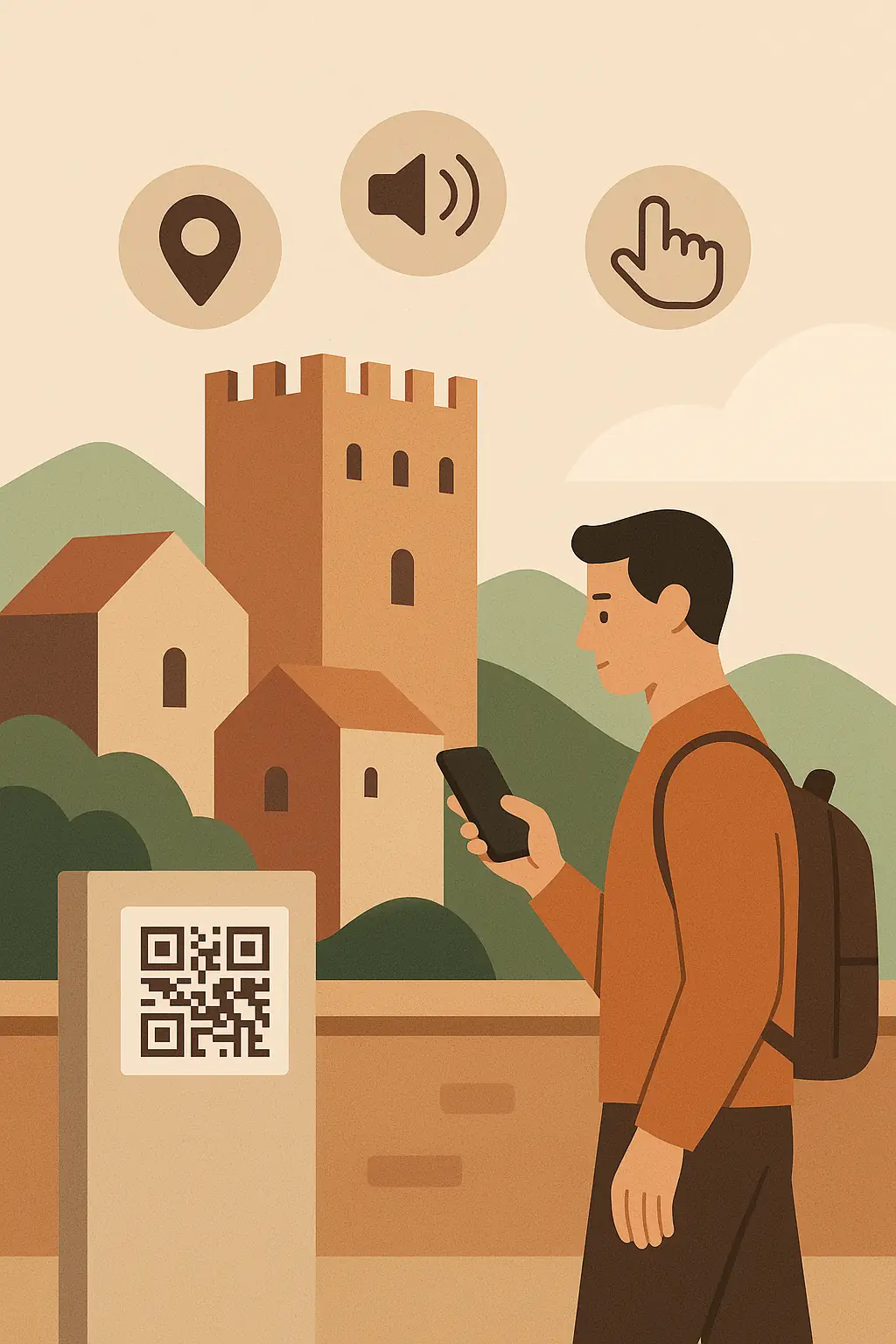
Interactive cultural itineraries were created to bridge this limit, offering a simple and immediate access to dedicated digital content. With your smartphone, the visitor can open a page of the place, listen to an audio guide, view images, watch a video or continue to other stages of the route.
The goal is not to complicate the visit, but to make it more engaging, more modern and more accessible. This approach is particularly useful for cultural institutions, local administrations, tourist operators and entities that want to enhance the historical heritage with concrete and sustainable digital tools.
Design needs
A solution of this type must first of all be simple to use. The visitor must be able to access contents in a few seconds, without installing applications, without complex procedures and without technical obstacles that interrupt the experience.
At the same time, the system must be easy to update. Texts, images, audio guides, videos and practical information must be able to be modified over time to follow the evolution of the route, exhibitions, events or the needs of the territory.
Another important need is scalability. You can start from a single monument or from a demo for a castle, but the base must also be suitable for larger projects: villages, tourist itineraries, city routes, widespread museums or networks of points of interest.
In this context, a web solution often represents the most effective choice: accessible from smartphones, easily distributable and ready to grow over time.
Proposed solution
The solution consists in the creation of accessible interactive cultural itineraries from smartphones via QR code, NFC or other digital access points. Every place, monument or stage of the route can be linked to a dedicated, designed page to offer useful information in a clear and engaging way.
Content may include historical descriptions, image galleries, audio guides, videos, maps, links to other stops and content in multiple languages. Like this the visitor does not just receive static information, but enters an experience richer narrative and more suitable for the on-site visit.
The QR code represents the most immediate and universal access point, ideal for information panels, plaques, brochures, totems or points of interest distributed throughout the area. NFC can be integrated into contexts where you want to offer additional interaction more fluid and immediate, with a simple approach of the phone.
A simple base, but ready to evolve
The project can start from a single page dedicated to a monument and then grow towards multi-stage routes, interactive maps, multilingual content, 3D experiences or augmented reality, maintaining coherence and continuity between the different phases.
Development methodology
The development of an effective interactive cultural journey always starts from a real case. The first step consists in identifying the place, the type of audience, the contents from enhance and the level of experience you want to offer the visitor.
In an initial phase it is possible to create a pilot project dedicated to an individual monument, castle or point of interest, so as to validate the structure of the page, the quality of the contents, navigation from smartphones and the effectiveness of the access point via QR code or NFC.
Once the concept has been validated, the system can be extended in several stages, integrating additional content, thematic itineraries, guided itineraries, maps and further tools to improve the visitor experience.
This approach allows you to build a solid, professional solution without leaving from overly complex projects, always maintaining the focus on real usability and value generated for the territory.
Outputs
The result is a concrete digital basis for transforming historical and cultural places in interactive experiences accessible from smartphones. The solution can be used to improve the visit, increase involvement and make it more effective valorisation of cultural heritage.
- Dedicated pages for monuments, castles, villages and points of interest
- Quick access to contents via QR code or NFC
- Multimedia content such as images, audio guides and videos
- Structure ready for multi-stage routes and thematic itineraries
- Mobile-first experience designed for the on-site visitor
- Scalable foundation for future extensions and new content
Advantages for local authorities and operators
A solution of this type allows you to improve the quality of the visit, offer richer content without weighing down physical spaces, update information over time and build a project that can grow with new stages, new contents and new needs.
Demo with QR code
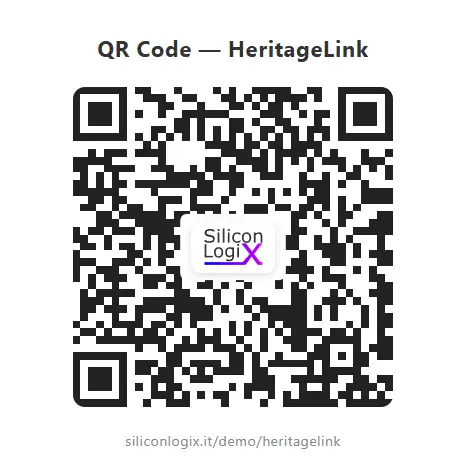
Demo links: https://www.siliconlogix.it/demo/heritagelink/
Application of the method
The approach used for this solution can be applied to many different contexts. It is not limited to a single monument or a single experience, but represents a basis reusable for cultural and tourist enhancement projects.
The same structure can be adapted to castles, historic villages, city centres, widespread museums, landscape itineraries, archaeological routes or networks of points of interest. You can start with a pilot project and then gradually expand the system accordingly to the client's objectives and the characteristics of the territory.
In this way it is possible to build professional interactive cultural paths, capable of improving the visitor experience and giving to the historical heritage a more effective, modern and consistent digital presence with public expectations.