Context
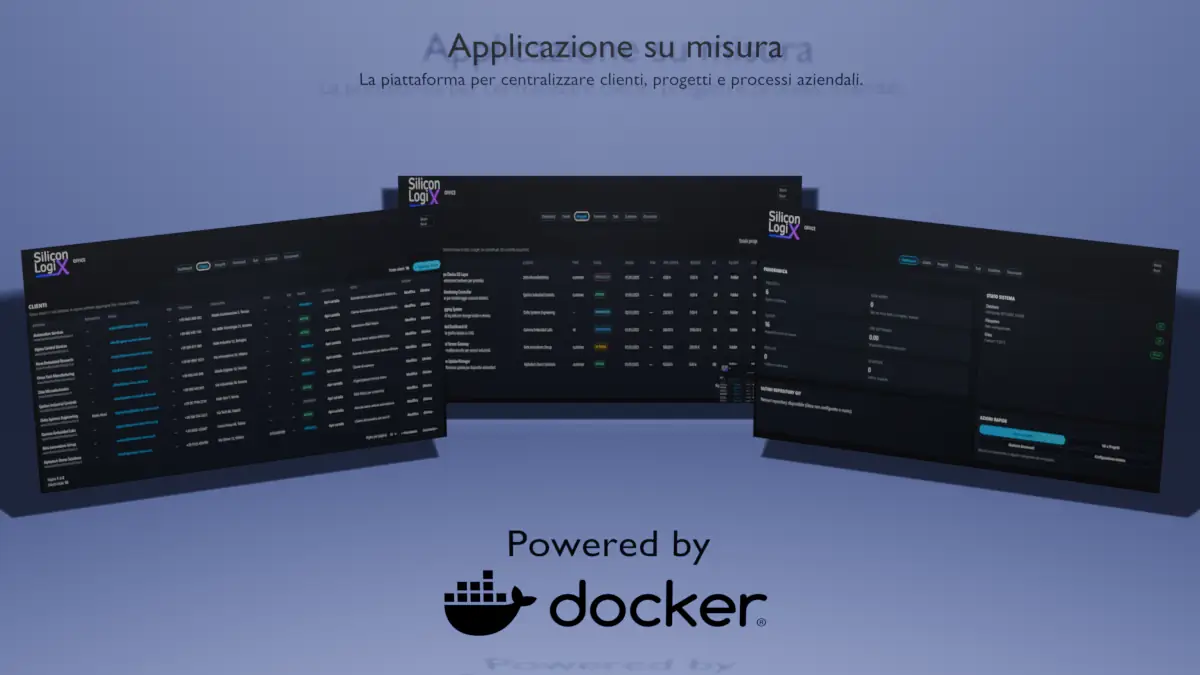
The project was born from the need to manage operational information in an orderly and coherent way, without depending on external services or generic tools that are poorly suited to technical processes. The objective is to define a solid foundation on which to build specific functions, avoiding fragmentation typical of improvised or non-integrated solutions.
The approach involves a clear, controllable and organized system, capable of adapting to changes over time needs of those working with complex projects, recurring tasks and related data. Not a product pre-packaged, but a platform that can evolve according to operational needs.
Design needs
The project requires a structure that allows different activities to be centralized while maintaining coherence and readability. The priority is to define a system that can be extended over time without introducing unnecessary complexity.
You need independent components, predictable processes and a clear data model. Everything must be able to be customized and adapted, so as to support operational flows specific without constraints imposed by standard solutions.
The objective is to build a technical base that can become a working tool tailored, consistent with the context in which it is used.
Technical structure
The application is organized on a separate tier architecture, with well-defined roles: Backend API, user interface, data management and execution environment. Each component operates independently, but communicates through stable interfaces, so as to guarantee order and predictability.
The backend part uses a router, middleware and internal services model, while the frontend It relies on reusable components and isolated state management. The relational database maintains a consistent structure, designed to grow while maintaining clear logic.
The entire system runs in a container environment, so as to obtain identical behavior in development, testing and production. This approach allows controlled updates, immediate rollbacks and a distribution without variables linked to the host machine.
Extensibility-oriented architecture
Each part can be expanded or replaced without compromising the rest of the application. This allows you to model the environment based on real processes, integrating functionality dedicated or advanced tools without having to rethink the entire project.
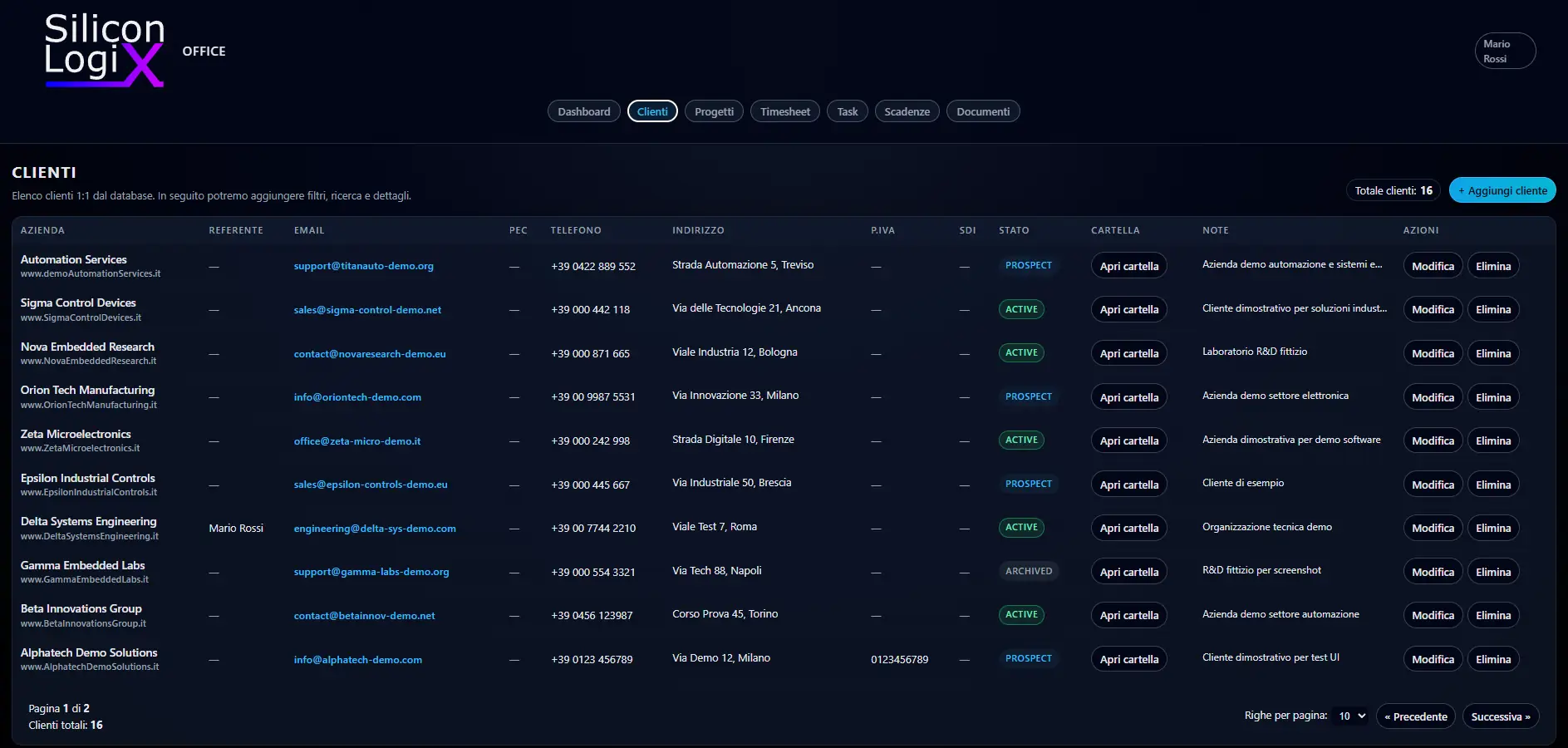
Development methodology
The project is structured on a modular platform, with particular attention to architecture and maintenance in the long term. Each component is clearly separated, with dedicated APIs, consistent validation and controlled flows on both the client and server sides.
The backend is organized as an independent service, with routers, middleware and layers well-defined access points. The frontend follows a logic of reusable components and local states isolated, making it easier to add new features when needed.
The development environment exactly replicates the production one thanks to containers. This eliminates differences between machines, reduces the risk of regressions and allows a predictable distribution.
The build process is automated via scripts that handle frontend, backend and generation of deployment images. The goal is to maintain an update cycle clear and repeatable.
The structure allows you to integrate new functions or adapt the application to needs specifications without impacts on the existing system.
Outputs
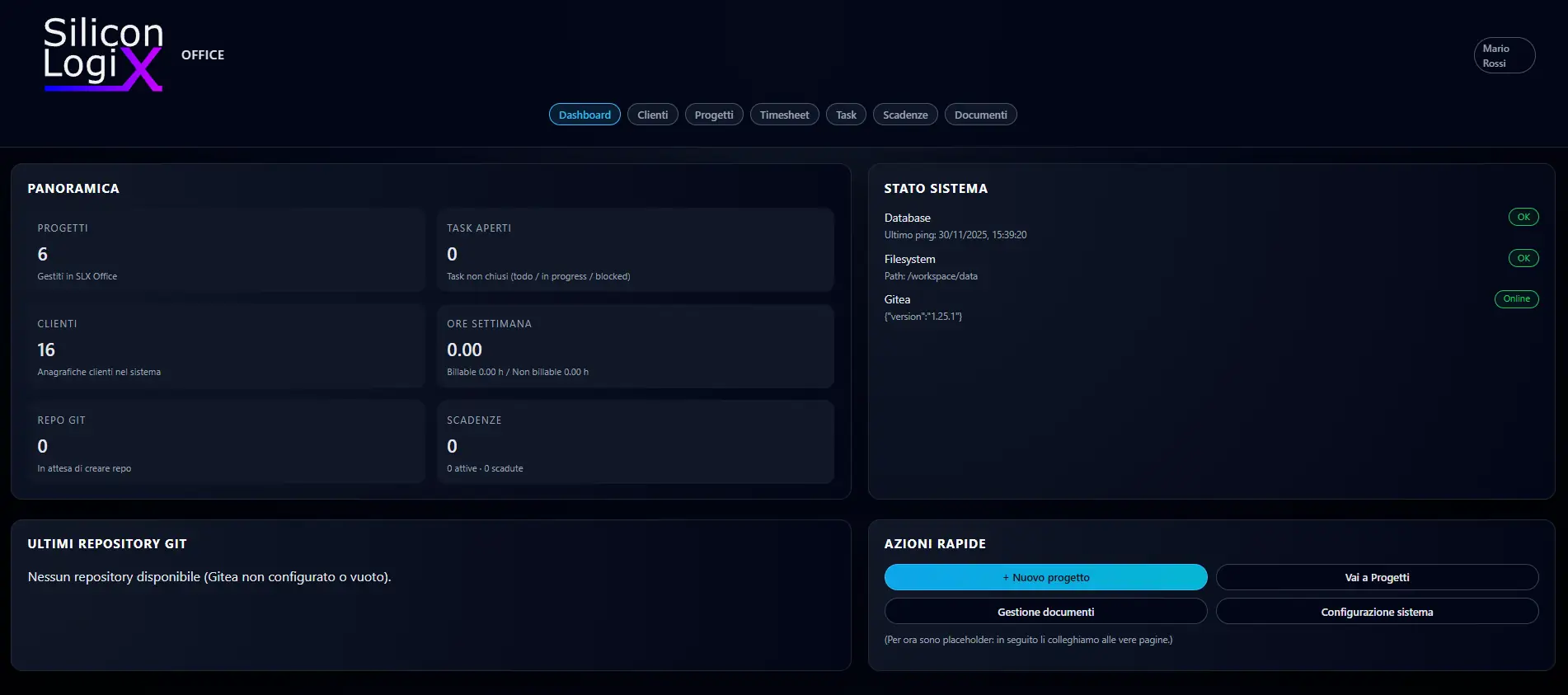
The platform offers a stable and organized base, designed to be extended and shaped depending on the operational processes. The separation of components allows you to manage future evolutions with targeted interventions, without the need to restructure the entire system.
The self-hosted environment ensures complete control over your data and allows for integrations specifications not tied to external services. The modular architecture also allows you to add new functions or dedicated panels in an orderly manner.
The result is a solid foundation for building dedicated applications and business tools tailor-made, in a technical context where reliability and design clarity are fundamental elements.
Application of the method
The approach used for SLX-Office is designed to also be applied to solutions completely different: internal dashboards, operational tools, data management systems or specific applications for business processes.
Attention is always paid to the structure: definition of the architecture, clean flows, modular components, consistent databases, stable APIs, and a reliable deployment environment.
This allows you to design tailor-made software that exactly follows the customer's needs: simple interfaces, dedicated functions, customized logic and integrations with existing systems present in the company.
Whether it is an internal application, a control panel, a technical platform or a tool built around a specific process, the workflow remains the same: careful design, orderly implementation and controlled distribution.
In this way it is possible to define and create dedicated solutions, always maintaining a basis clear and verifiable technique.