

AI
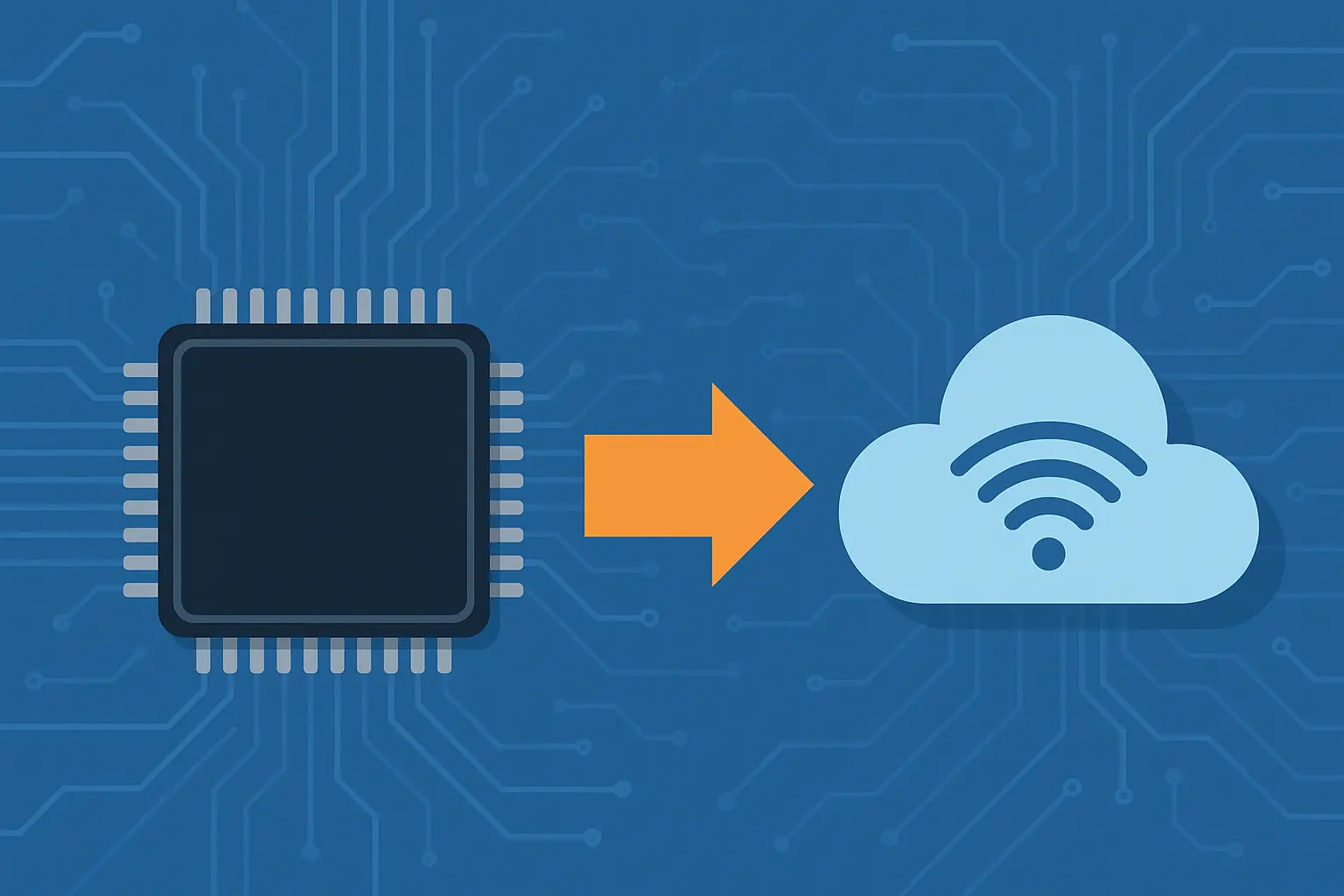
Microcontrollers vs cloud: why AI is moving to the edge
Why newer MCUs, rising cloud costs and real-time requirements are pushing more IoT intelligence onto the device.
04 / AI
Local inference when memory, power, latency or connectivity require processing close to the sensor on MCUs or embedded platforms.
Platforms and tools follow your context. Some examples:
AI
Bring inference onto the device
MCUs · SoCs · acceleratorsSelected for available hardware
Formats · operators · runtimesTarget compatibility
Quantisation · buffers · FlashActual device resources
Timings · workloads · measurementsApplication constraints
Data · sensors · interfacesInference in the system workflow
Accuracy · resources · performanceResults measured on the device
The technologies shown are examples.
Engineering support within your team, with shared tools and working methods.
TECHNICAL SCOPE
Feasibility is checked on the actual platform: the model is only part of the cost because acquisition, buffers and preprocessing consume memory and time. Accuracy and resources are compared, considering quantisation and compatible formats. Behaviour remains defined for invalid data or insufficient confidence.
I define the platform, acquisition, runtime and resource budgets with firmware and model teams. I can support porting, profiling or product integration while retaining existing pipelines and tools when compatible with the target.
Reference-model and exported-version results are compared on the same inputs. Memory, timing and behaviour with invalid data are measured on the device. Quantisation and optimisation are assessed alongside any changes in results.
Exported model, inference code, configuration and target measurements. Acceptance thresholds refer to documented data, frequency and operating conditions.
Specify the MCU or SoC, available RAM and Flash, data source, maximum latency and energy requirements.
It depends on runtime, memory and update architecture. Some products use a separate artifact; others distribute the model with firmware. The process is verified on the target.
Why newer MCUs, rising cloud costs and real-time requirements are pushing more IoT intelligence onto the device.

What changes when a TinyML demo becomes a product: data quality, quantization, memory, latency, OTA, monitoring and lifecycle.

How neural processing units inside embedded SoCs change edge AI design, latency, privacy, power consumption and product architecture.
THE NEXT STEP