

AI
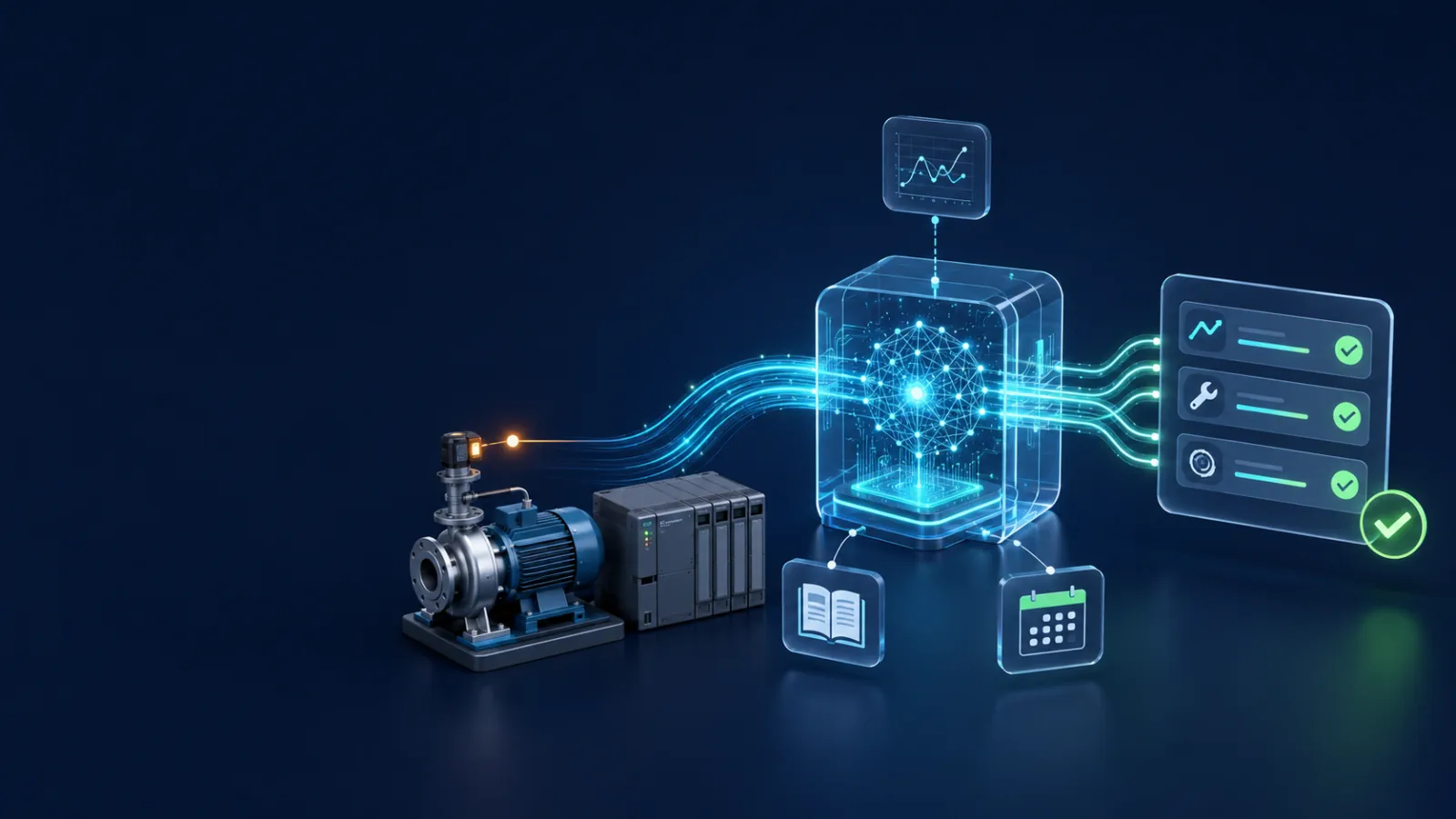
AI for industrial alarms: diagnosis with SCADA and PLC data
How to connect SCADA alarms, PLC data, sensors, maintenance history, and technical documents with AI to support verifiable industrial diagnosis.
04 / AI
Models for classification, estimation and anomaly detection using relevant data, with metrics and constraints defined before training.
Platforms and tools follow your context. Some examples:
AI
Tailored AI: goals, data, models and integration
Tailored AI solutionsReal data, workflows and constraints
Collection · checks · transformationsData that fits the use case
Baselines · comparison · parametersResults-driven choices
Metrics · errors · difficult casesSeparate verification data
Applications · services · devicesUse in the real workflow
Latency · resources · behaviourDocumented limits and results
The technologies shown are examples.
Engineering support within your team, with shared tools and working methods.
TECHNICAL SCOPE
Work starts with a measurable question and a simple baseline. Data quality, representativeness and availability determine feasibility more than the model name. Training and evaluation remain separate, and inference integration considers errors, uncertainty and opportunities for human review.
I define the decision the model should support and the differing consequences of errors with process specialists. I can contribute to data preparation, evaluation or integration within existing pipelines, keeping configurations and versions traceable.
The baseline and candidate models are compared on validation data separate from training. A test set kept out of model selection supports the final evaluation. Classes, critical cases and new conditions are examined alongside the overall metric, with sample counts and test limits documented.
Repeatable pipeline, selected model, configuration and evaluation report. Metrics include data limits and conditions: a laboratory result is not presented as universal performance.
Provide representative examples, success criteria, error costs and the environment where results will be used.
Yes, when the model, preprocessing, usable data and evaluation objective are available. Work can focus on errors, version comparisons or integration into client software.
How to connect SCADA alarms, PLC data, sensors, maintenance history, and technical documents with AI to support verifiable industrial diagnosis.
THE NEXT STEP