

Desktop applications
Applications and engineering tools for the client’s operating systems and stack.
02 / TECHNICAL AREA
Custom software, desktop applications, business tools and integrations. I can develop an application or support your team in its existing stack and repositories. Platforms, languages and delivery practices follow the client’s environment, from focused development to ongoing technical collaboration.
Platforms and tools follow your context. Some examples:
Skills & technologies
Applications · data · integrations
C++ · Qt / QML · Python · .NETThe client’s operating systems
Roles · documents · tasksCustom workflows
Services · REST · integrationsConnected systems and data
Acquisition · analysis · reportsRepeatable procedures
Models · scenarios · digital twinsInteractive engineering tools
Debugging · porting · refactoringMaintaining existing code
The technologies shown are examples.
Engineering support within your team, with shared tools and working methods.
You can bring me into your team as an external developer or commission an application or module. I work with your existing stack, repositories, conventions and business processes, agreeing responsibilities and communication. Languages and frameworks follow the client’s context.
A custom application starts with the work it needs to support: its users, input data and the decisions or operations it must enable. Business tools, internal applications and desktop software are organized around a focused initial scope, with roles, interfaces and acceptance criteria agreed before development.
Desktop applications can combine data acquisition, serial communications, analysis and reporting. C++, Qt, QML and Python appear in Silicon LogiX projects; technology choices follow operating systems, libraries, performance and maintenance requirements. Simulators and digital twins also allow scenarios and model behavior to be compared before testing physical systems.
Backends and APIs connect applications, business systems, data stores and devices through defined workflows. Integrations need clear data formats and quality expectations, responsibilities, permissions and error handling. Where appropriate, a focused module can work alongside existing systems and reduce manual steps without replacing the entire working environment.
Development proceeds in verifiable increments using representative data and use cases. Delivery can include source code, configuration, build procedures, tests and interface documentation. Installation, update and support requirements are agreed alongside the application scope so the result can be used by the team that will maintain it.
A software project does not require new hardware. Focused debugging, porting, integration and modernization work can also address existing applications. This area brings together software services, projects and articles; connections to other areas identify related web, embedded or AI components.
ILLUSTRATIVE ARCHITECTURE
An orientation diagram: components, boundaries and verification are defined for each project.
ENGINEERING SCOPE
Applications and engineering tools for the client’s operating systems and stack.
Tasks, documents, roles and workflows built around business processes.
Connect applications, business systems and data with clear interfaces and responsibilities.
Acquisition, analysis, repeatable procedures and engineering reports.
3D scenarios, system models and solution comparison before field testing.
Debugging, porting and modernization of existing software through verifiable steps.
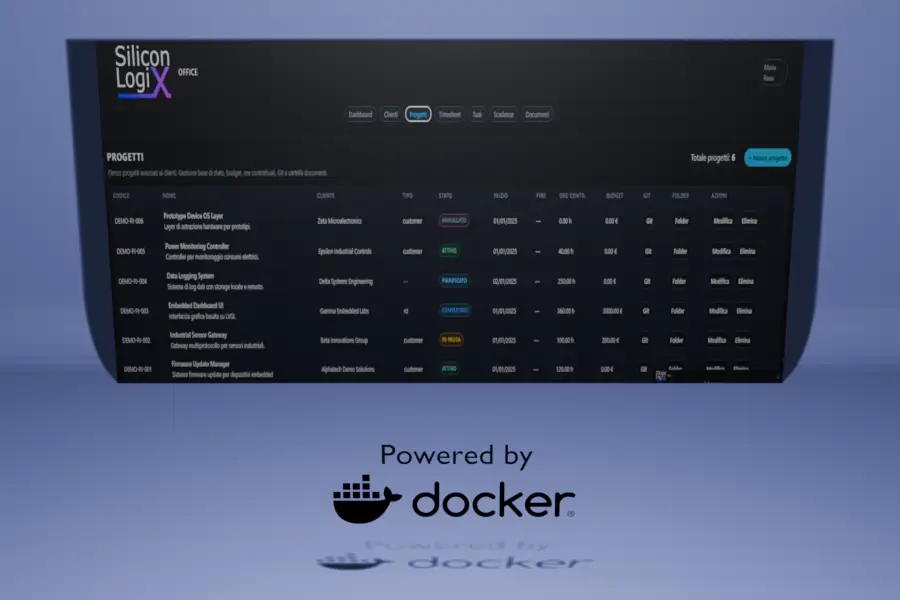
A self-hosted internal management platform designed as a technical base for custom business applications and process automation.
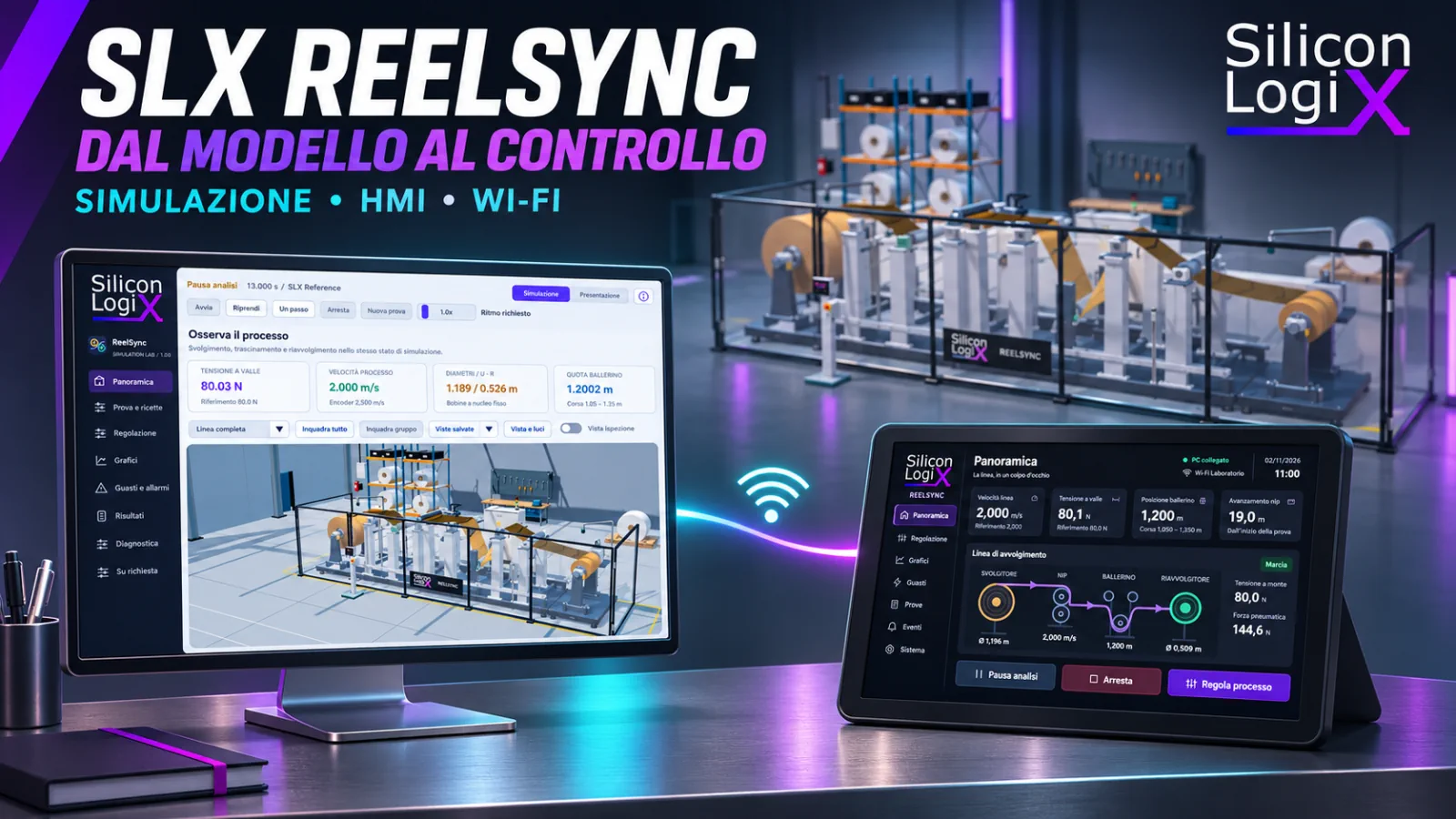
Variable-radius reels, material elasticity, encoder errors and alarms: a technical look at web tension control and the Raspberry Pi dashboard in SLX ReelSync.
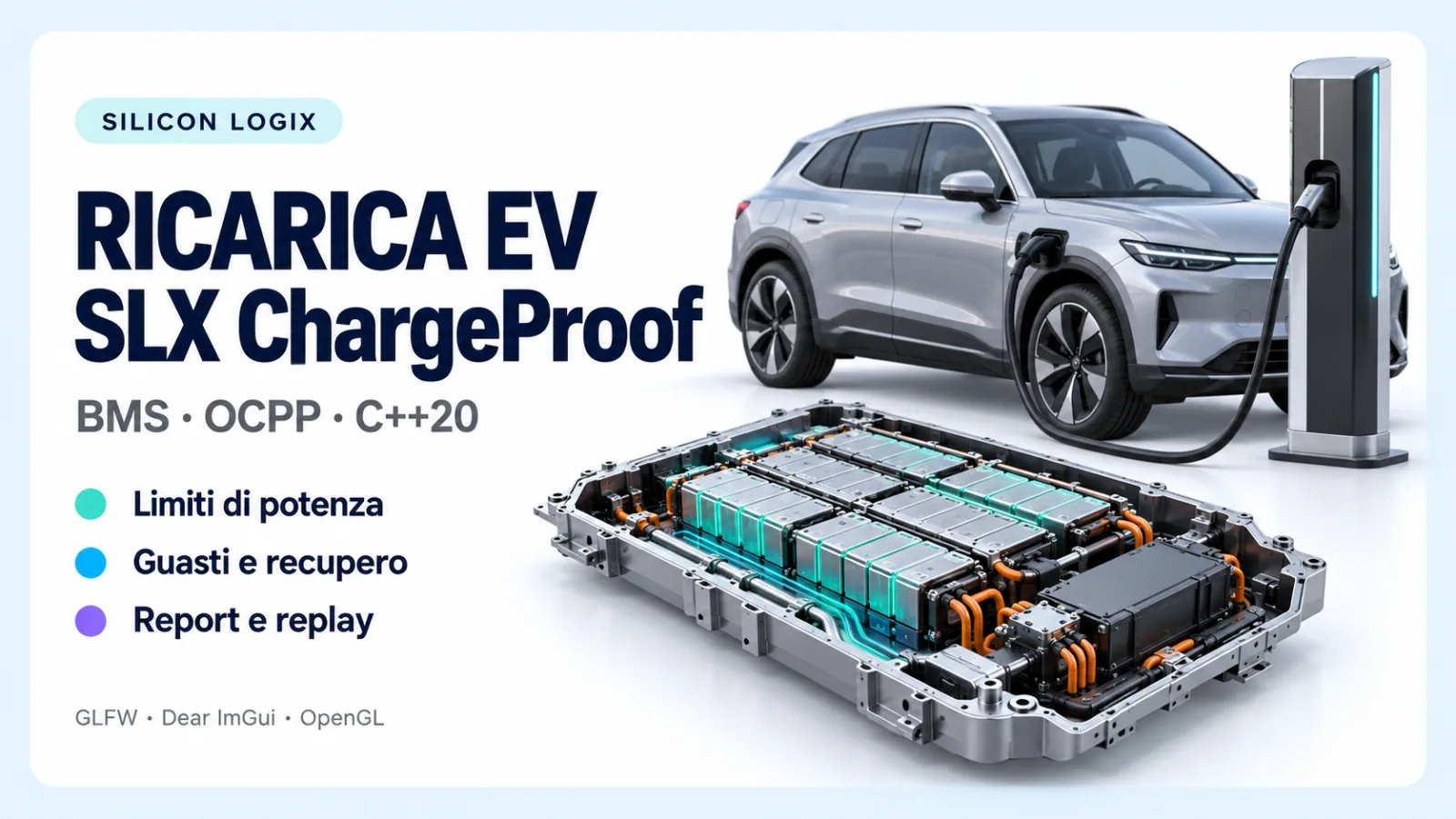
Why does EV charging slow down, and will the vehicle be ready at departure? SLX ChargeProof combines a C++20 electrothermal model, local OCPP and a 3D laboratory to explore power limits, faults, recovery and repeatable results.
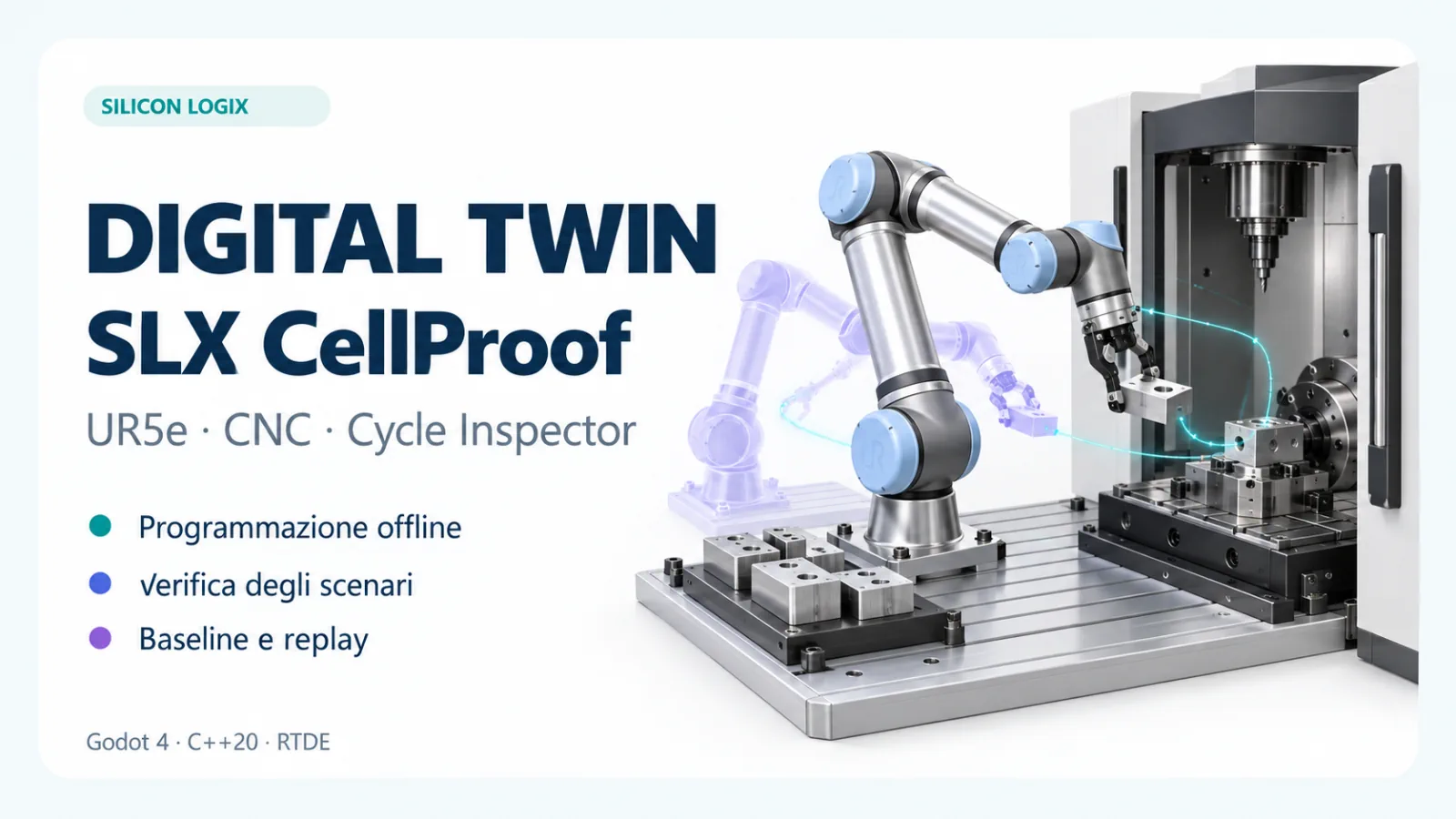
Explore SLX CellProof, a UR5e-CNC digital twin demonstrator with offline programming, fault scenarios, baselines and Cycle Inspector. Godot 4, C++20 and read-only RTDE connect visualization, sequences and controller data.
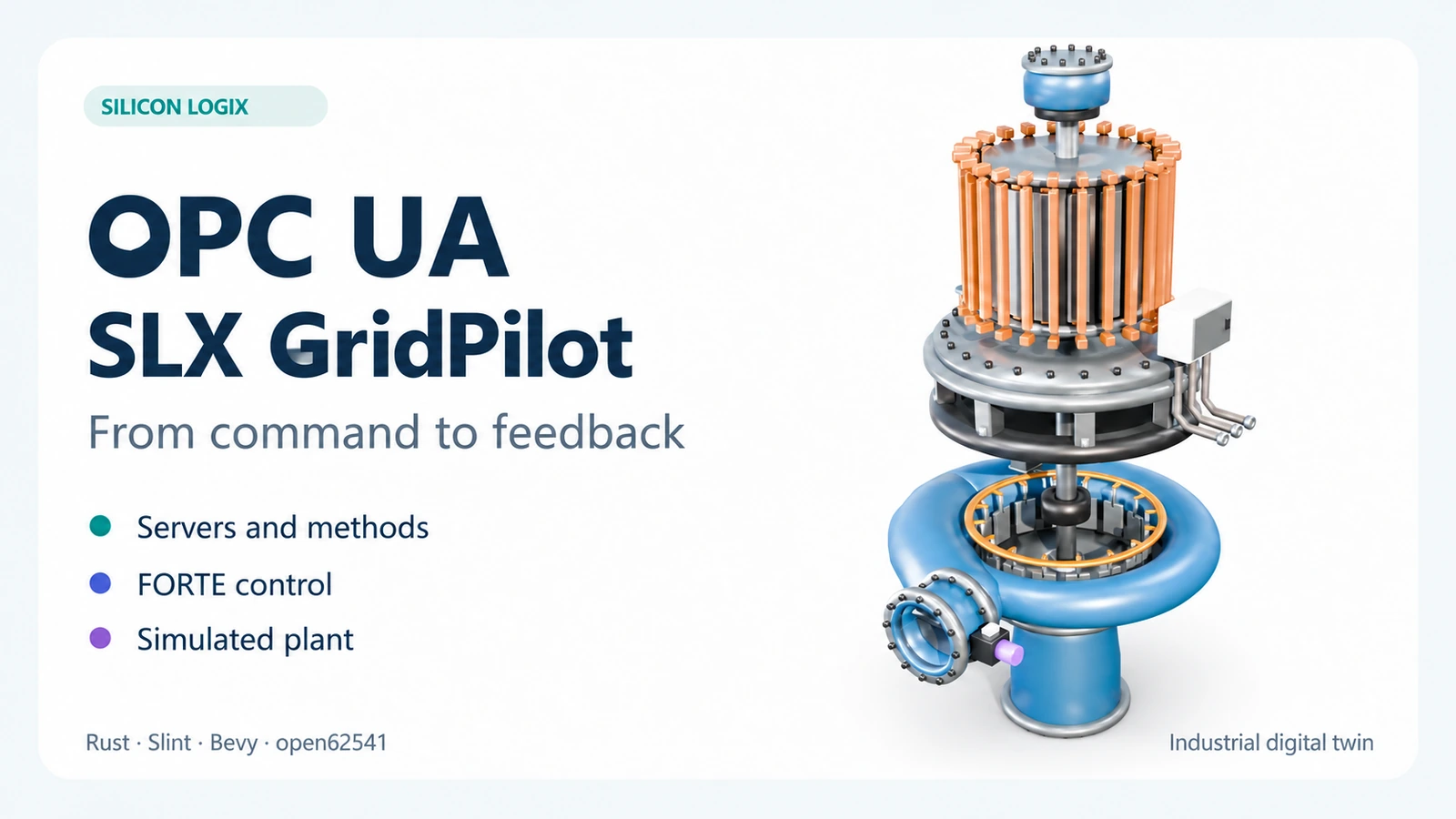
Explore OPC UA with SLX GridPilot: three real servers, FORTE control and a simulated 3D hydro plant. Follow nodes, methods, subscriptions, quality and alarms from command to feedback.
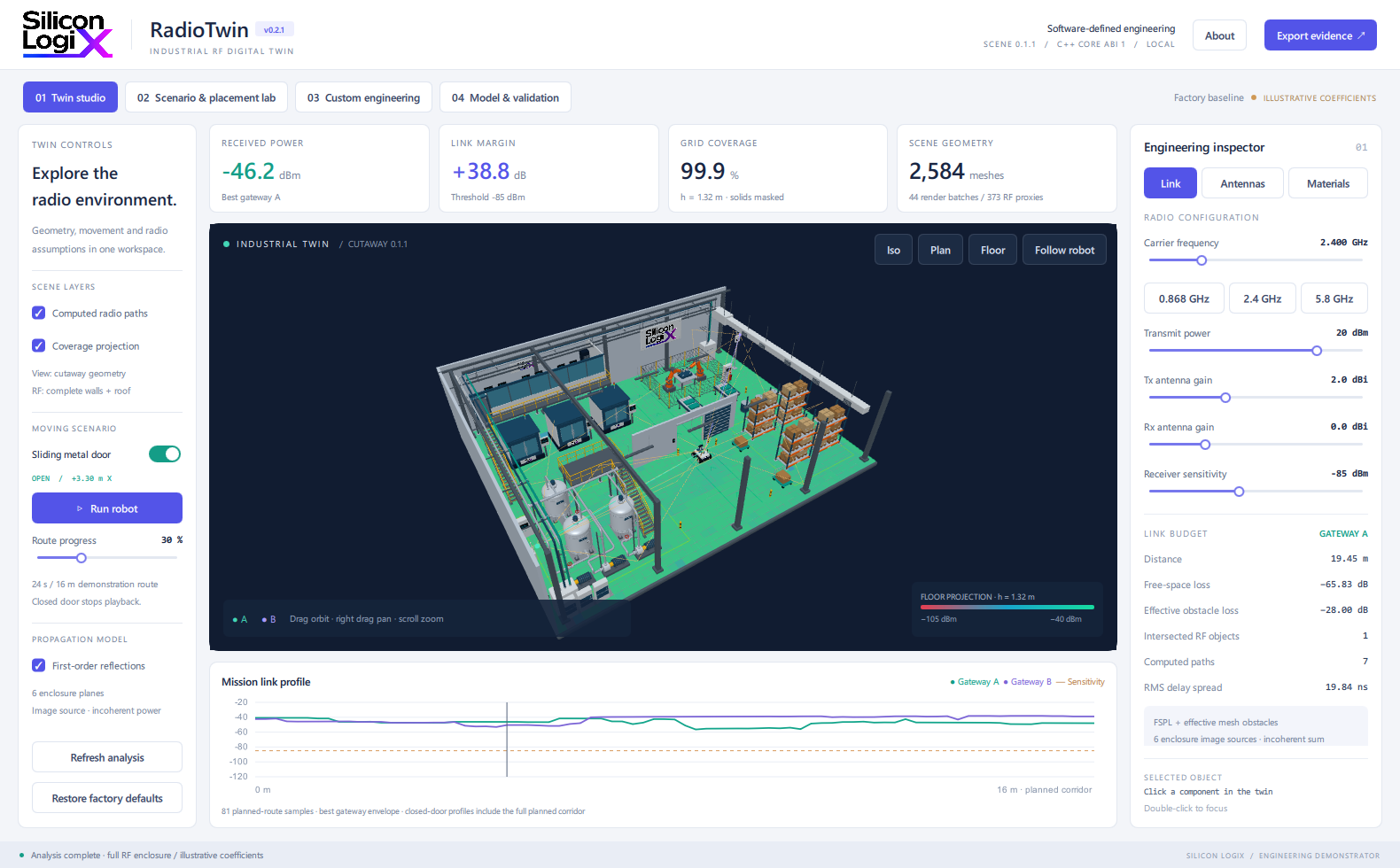
Silicon LogiX introduces SLX RadioTwin: industrial 3D geometry, radio propagation and a moving robot. A C++ and Qt demonstrator for comparing scenarios, documenting assumptions and defining tailored engineering tools.
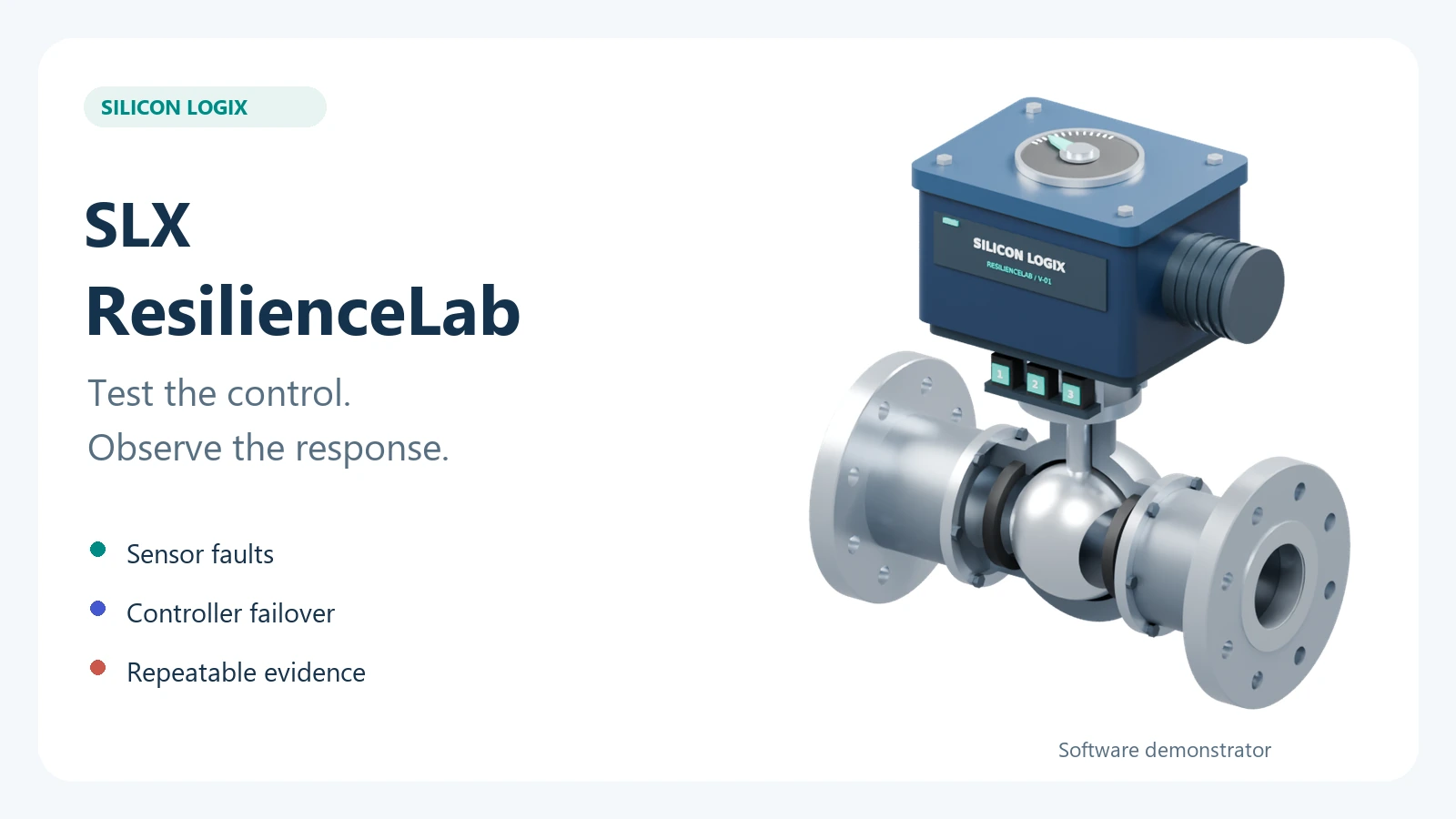
A virtual valve, three sensors and two C++ controllers: repeatable faults, live simulation, APIs and reports to design a dedicated test bench for your product.
THE NEXT STEP