

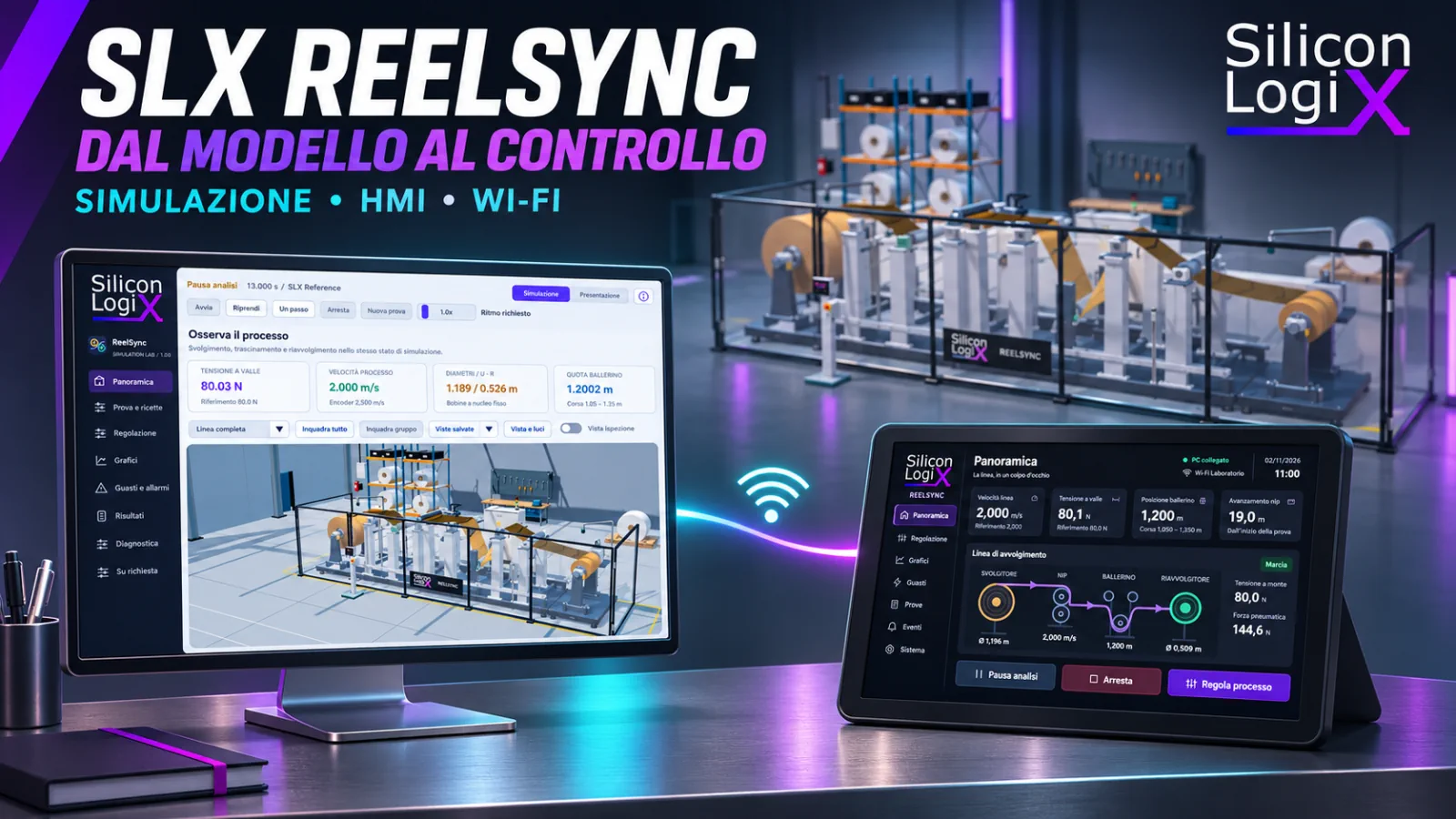
Software
Web tension control: simulated faults with SLX ReelSync
Variable-radius reels, material elasticity, encoder errors and alarms: a technical look at web tension control and the Raspberry Pi dashboard in SLX ReelSync.
02 / SOFTWARE
Models and interactive tools for comparing architectures, parameters and scenarios before field testing, with explicit assumptions and limits.
Platforms and tools follow your context. Some examples:
Software
System models and environments for scenario comparison
States · dynamics · parametersExplicit assumptions and limits
Inputs · events · fault casesRepeatable comparisons
Geometry · views · interactionBehaviour inspection
Protocols · software · test benchesConnections within the agreed scope
Metrics · trends · resultsEffects of engineering choices
Evidence · limits · reproducibilityDocumented results
The technologies shown are examples.
Engineering support within your team, with shared tools and working methods.
TECHNICAL SCOPE
A model is useful when it answers a defined question: configuration comparison, diagnosis or sequence verification. Inputs, observable quantities and required fidelity are established. 3D visualisation and simulation are distinguished: a readable scene alone does not establish the physical validity of a model.
I agree which decision the model should support, parameter sources and the required level of detail. I can develop a module or scenario within existing software, working with domain specialists and the client’s validation practices.
Work starts from a simple case with a known result or available measurements, then explores variations and boundary conditions. Reports separate assumptions, simulated behaviour and real-system evidence. The quality of a 3D presentation does not replace this verification.
Tool, repeatable scenarios, documented assumptions and comparison results. Demonstrators such as SLX RadioTwin illustrate the method: validation and decision use depend on the agreed context.
Define the decision to support, available data and measurements for comparing simulated behaviour.
It can help prepare tests and compare alternatives. Model use and required checks on the physical system depend on context and agreed validation.
Variable-radius reels, material elasticity, encoder errors and alarms: a technical look at web tension control and the Raspberry Pi dashboard in SLX ReelSync.

Why does EV charging slow down, and will the vehicle be ready at departure? SLX ChargeProof combines a C++20 electrothermal model, local OCPP and a 3D laboratory to explore power limits, faults, recovery and repeatable results.
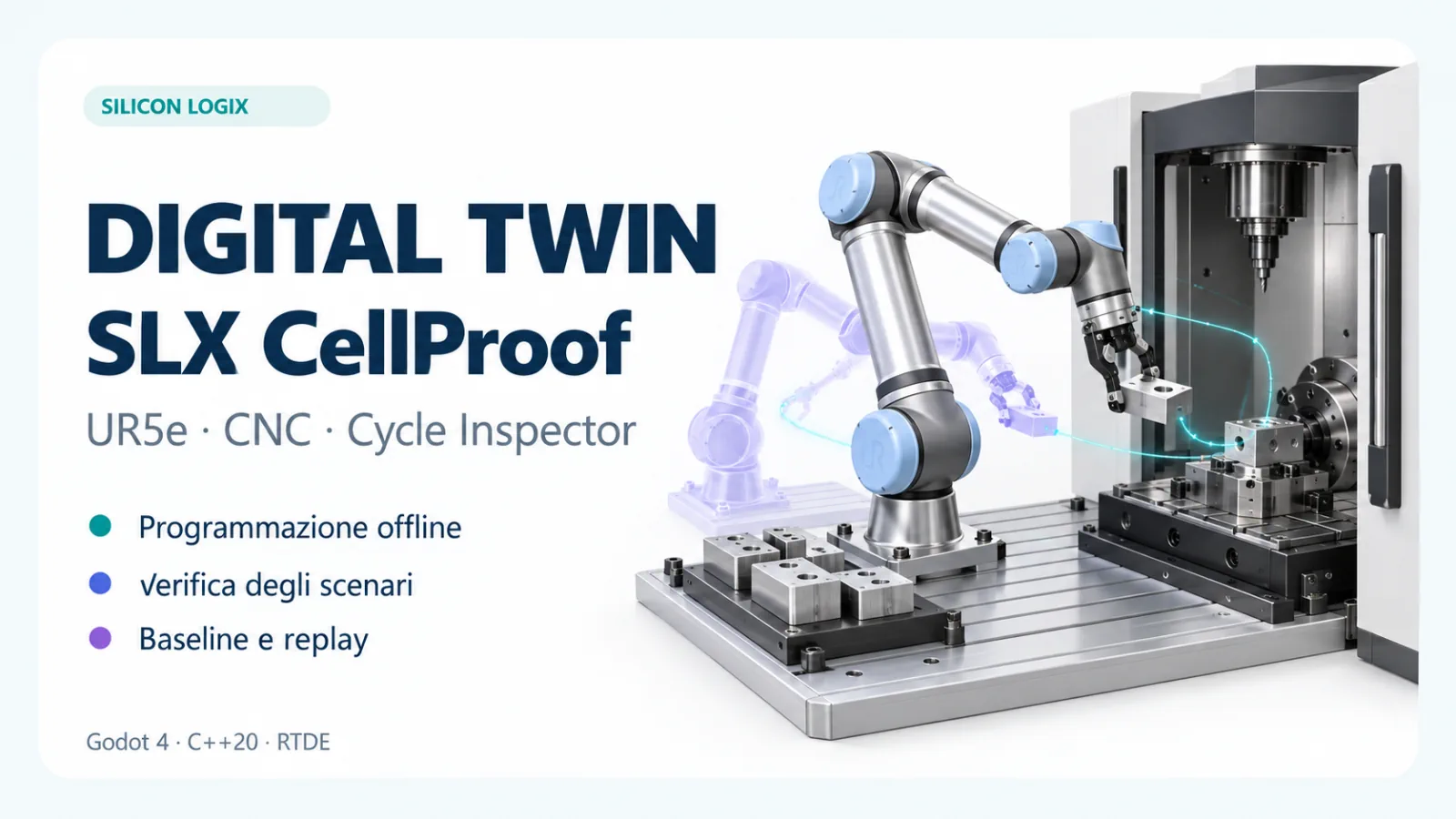
Explore SLX CellProof, a UR5e-CNC digital twin demonstrator with offline programming, fault scenarios, baselines and Cycle Inspector. Godot 4, C++20 and read-only RTDE connect visualization, sequences and controller data.
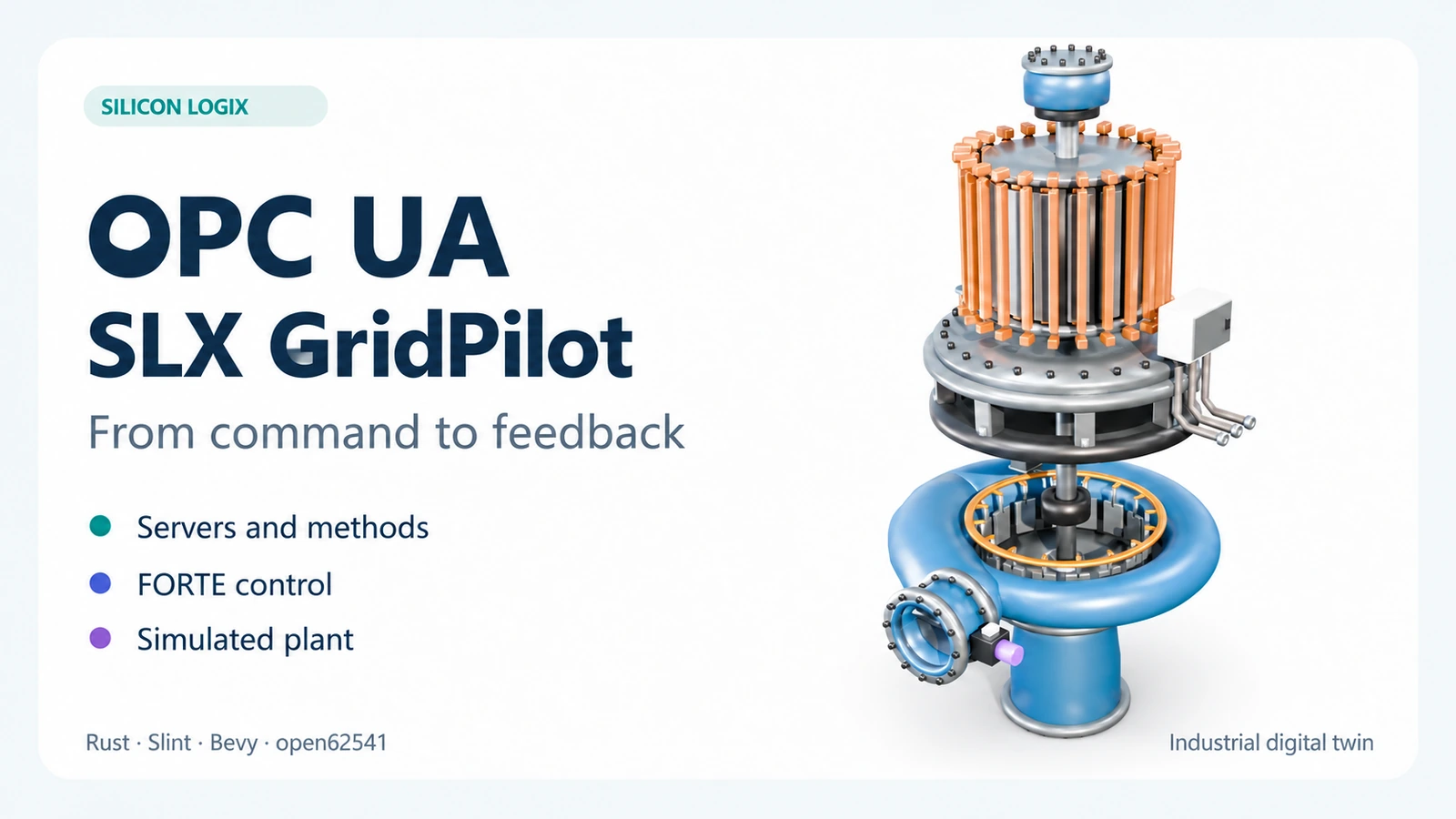
Explore OPC UA with SLX GridPilot: three real servers, FORTE control and a simulated 3D hydro plant. Follow nodes, methods, subscriptions, quality and alarms from command to feedback.
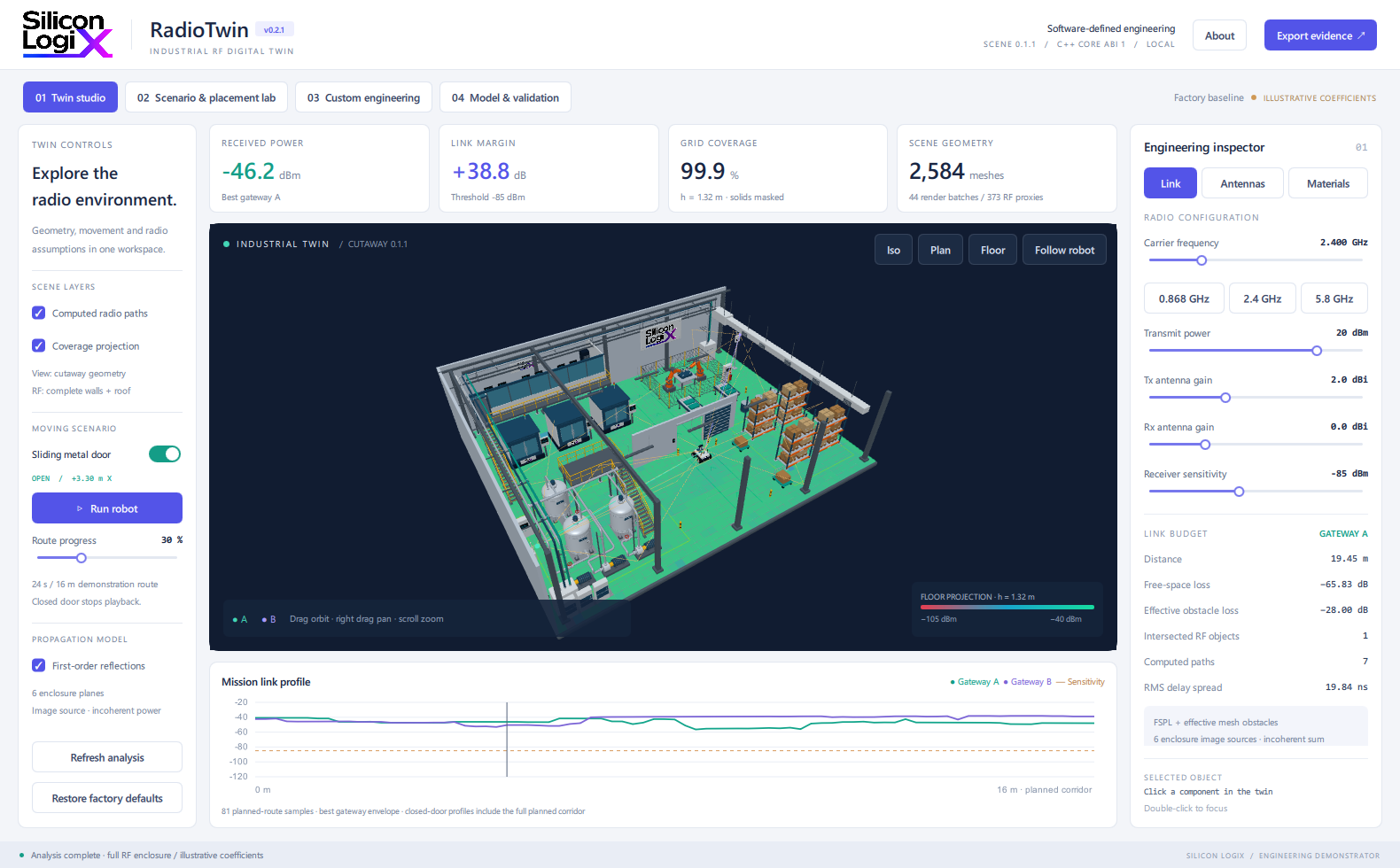
Silicon LogiX introduces SLX RadioTwin: industrial 3D geometry, radio propagation and a moving robot. A C++ and Qt demonstrator for comparing scenarios, documenting assumptions and defining tailored engineering tools.
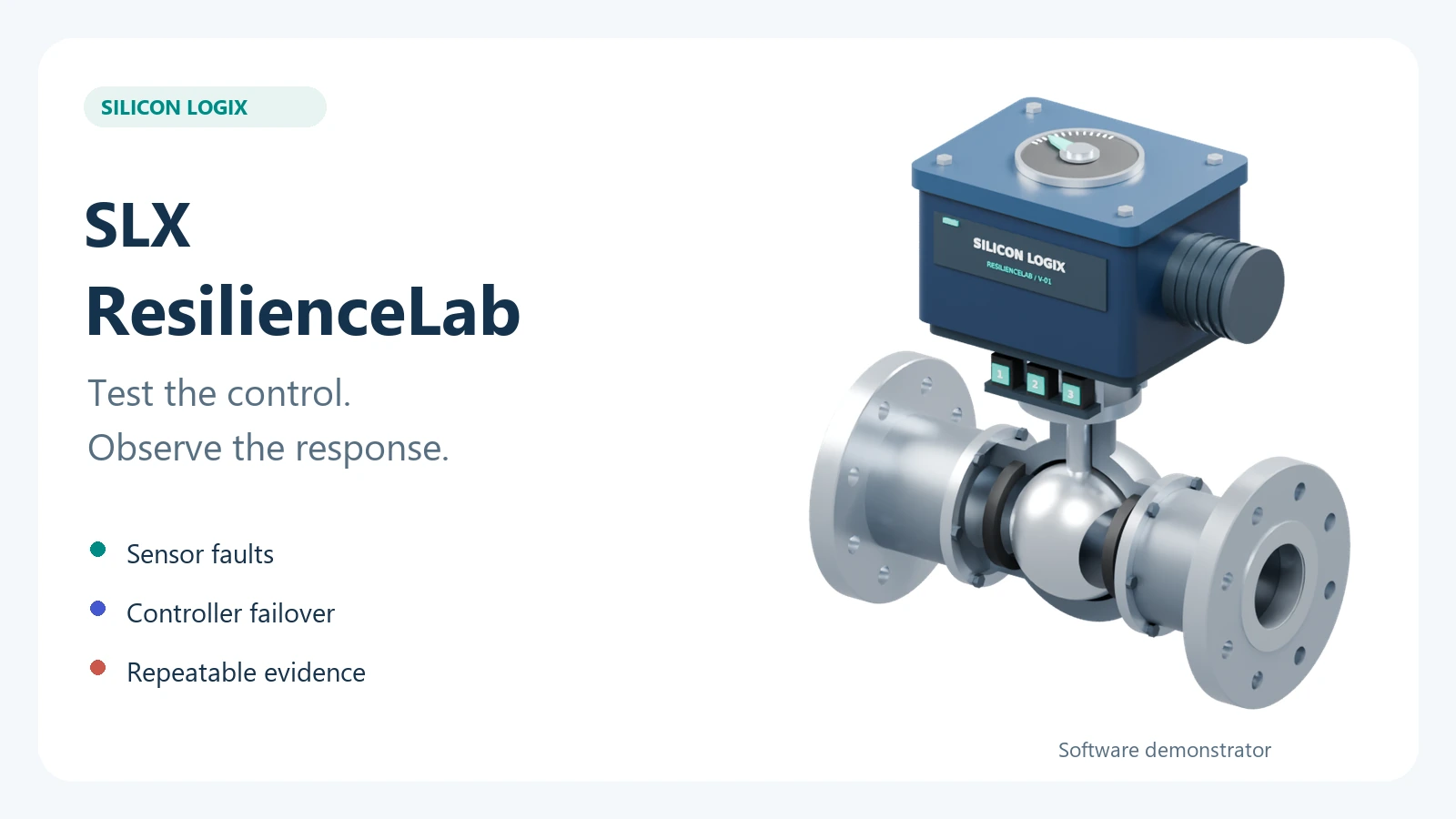
A virtual valve, three sensors and two C++ controllers: repeatable faults, live simulation, APIs and reports to design a dedicated test bench for your product.
THE NEXT STEP