

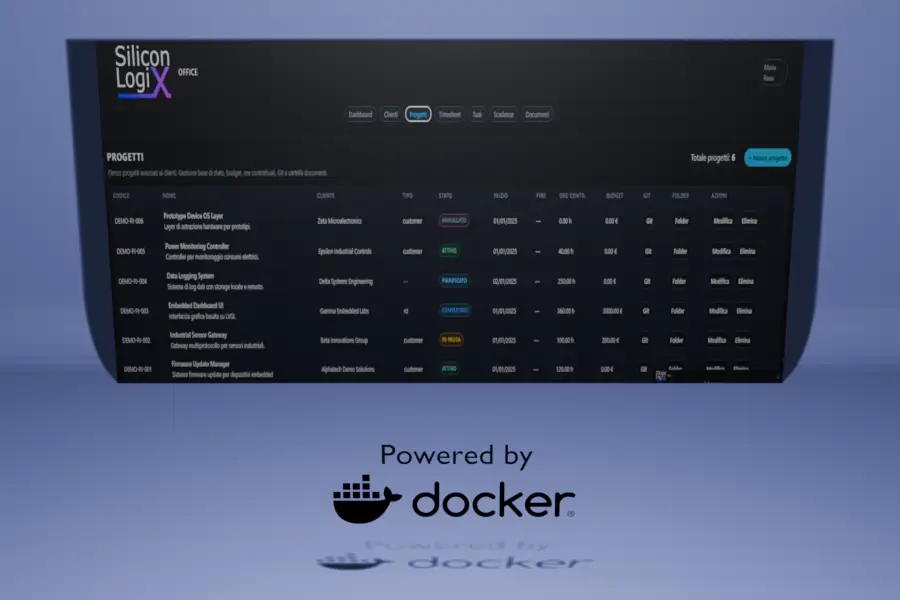
SLX Office - self-hosted management platform
A self-hosted internal management platform designed as a technical base for custom business applications and process automation.
Software / Web App / Node.js / React / Docker / PostgreSQL / Self-Hosted
02 / SOFTWARE
Tasks, documents, records and responsibilities in a system matching business processes, with verifiable permissions and transitions.
Platforms and tools follow your context. Some examples:
Software
Applications built around business processes
States · assignments · deadlinesEveryday workflows
Permissions · responsibilities · accessRole-based operations
Records · cases · attachmentsOrganised information
APIs · business tools · existing systemsAgreed data exchange
Metrics · filters · exportsVisibility into operations
Priorities · releases · maintenanceVerifiable increments
The technologies shown are examples.
Engineering support within your team, with shared tools and working methods.
TECHNICAL SCOPE
Work starts with the actual flow: who enters data, who approves it and where it is reused. A shared model is defined before screens to avoid duplication across spreadsheets and applications. Integrations and any historical imports have their own scope and validation.
I work with operators and system owners to distinguish necessary steps, exceptions and duplication. I can support the team on a module or integration, respecting the records, roles and procedures the business intends to retain.
An example is a request moving from entry to assignment, approval and closure. Permissions, concurrent changes, missing data and history are checked. Historical imports need mapping checks and a comparison between initial data and the result.
Agreed features, data model, operating instructions and workflow tests. Access management, backups and maintenance responsibilities are clarified before handover.
Useful inputs include forms, spreadsheets, document samples and exceptions currently requiring manual work.
A module or integration can work alongside it when interfaces and access allow. Replacement is a decision to assess against the process and available data.
A self-hosted internal management platform designed as a technical base for custom business applications and process automation.
THE NEXT STEP