

AI
Raspberry Pi 5 AI: quality inspection without the cloud
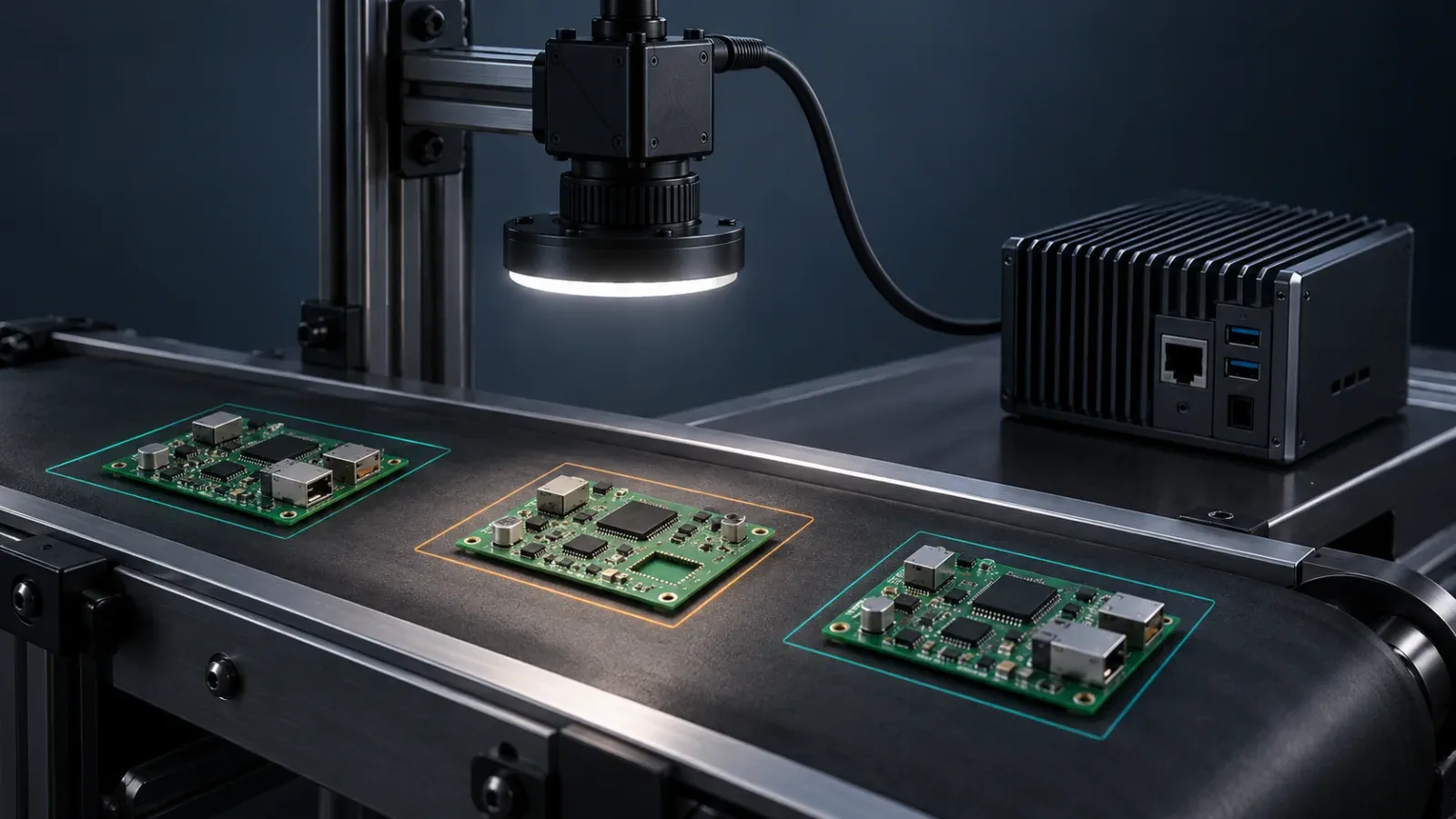
A reversed connector, a missing accessory, a defect to catch: evaluate Raspberry Pi 5 and Sixfab AI HAT+ for visual quality inspection with local AI.
04 / AI
Image analysis for classification, detection and inspection: models are evaluated alongside optics, lighting and acquisition conditions.
Platforms and tools follow your context. Some examples:
AI
Image acquisition and analysis for the real use case
Cameras · optics · lightingSource quality
Labels · selection · checksRepresentative cases
Classification · detectionSegmentation and inspection
False positives · missed casesReal-problem evaluation
PCs · edge · existing systemsPlatform constraints
Lighting · variability · performanceBehaviour on real cases
The technologies shown are examples.
Engineering support within your team, with shared tools and working methods.
TECHNICAL SCOPE
Image quality is part of the system. Observable defects, framing and variations in parts, background and lighting are defined. Separate test samples distinguish generalisation from memorisation. The interface must show results and allow uncertain cases to be inspected with sufficient context.
I clarify objects, observable defects, acquisition and expected variation with client specialists. I can work on datasets, acquisition software or inference within the existing environment. Models and thresholds are evaluated alongside the camera, optics and lighting.
A test set can include variations in lighting, position, batches and defect-free cases. False rejects and missed defects are examined under documented conditions. Synthetic data and simulation support experiments, but transfer to real captures needs dedicated verification.
Pipeline, model, verification scenarios and error analysis. Synthetic data, as explored in SLX SynthForge demonstrators, can support experiments but do not replace validation on real captures.
Bring real images, defect examples, camera and optics specifications and available time per acquisition.
They can explore controlled variation. Estimating behaviour in the operating environment also needs data relevant to that environment and explicit comparison criteria.
A reversed connector, a missing accessory, a defect to catch: evaluate Raspberry Pi 5 and Sixfab AI HAT+ for visual quality inspection with local AI.
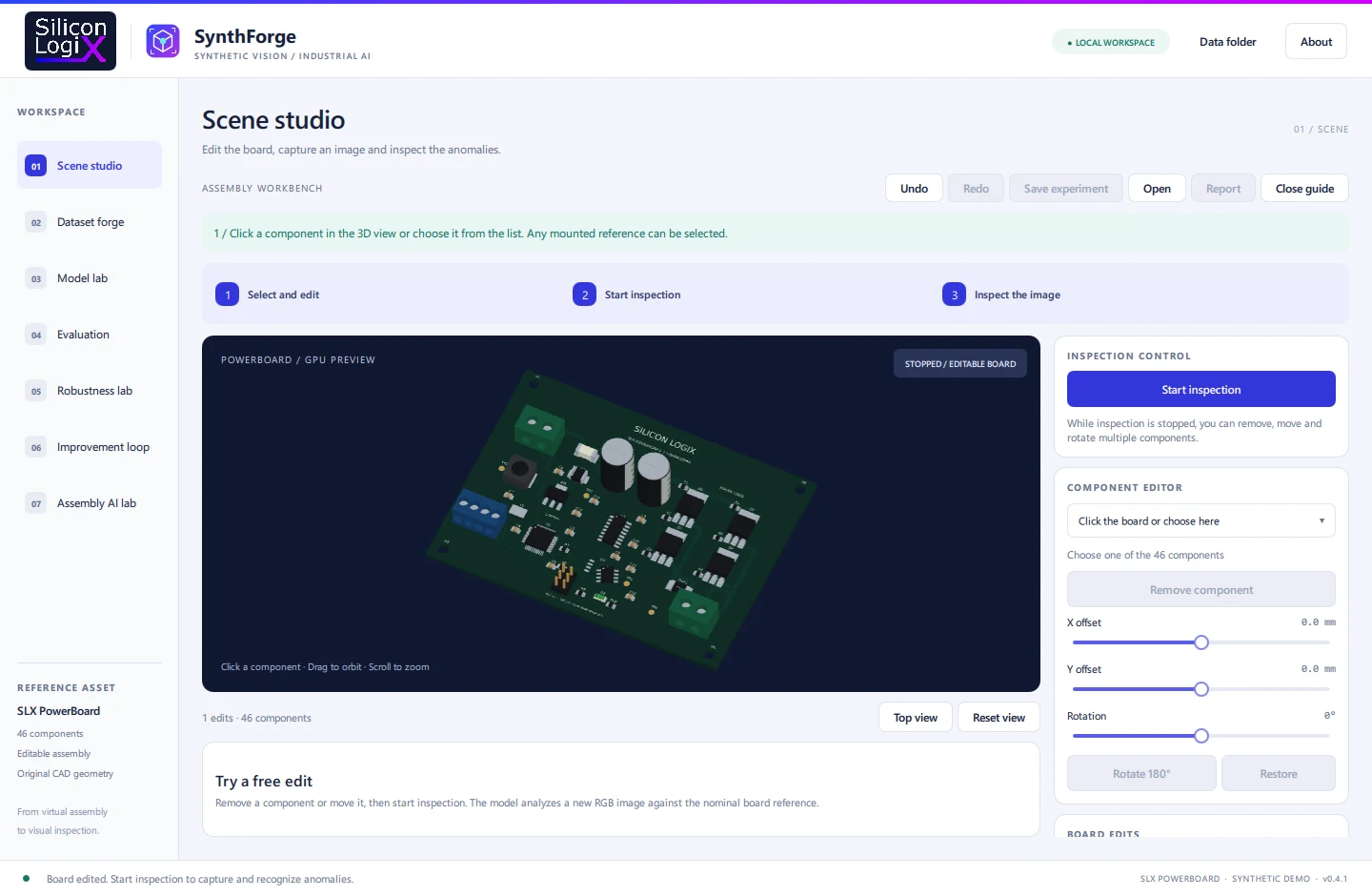
SLX SynthForge brings industrial vision to GitHub: 3D boards, synthetic data and softmax classifiers, with a C++ engine, Qt interface and Python/NumPy training.
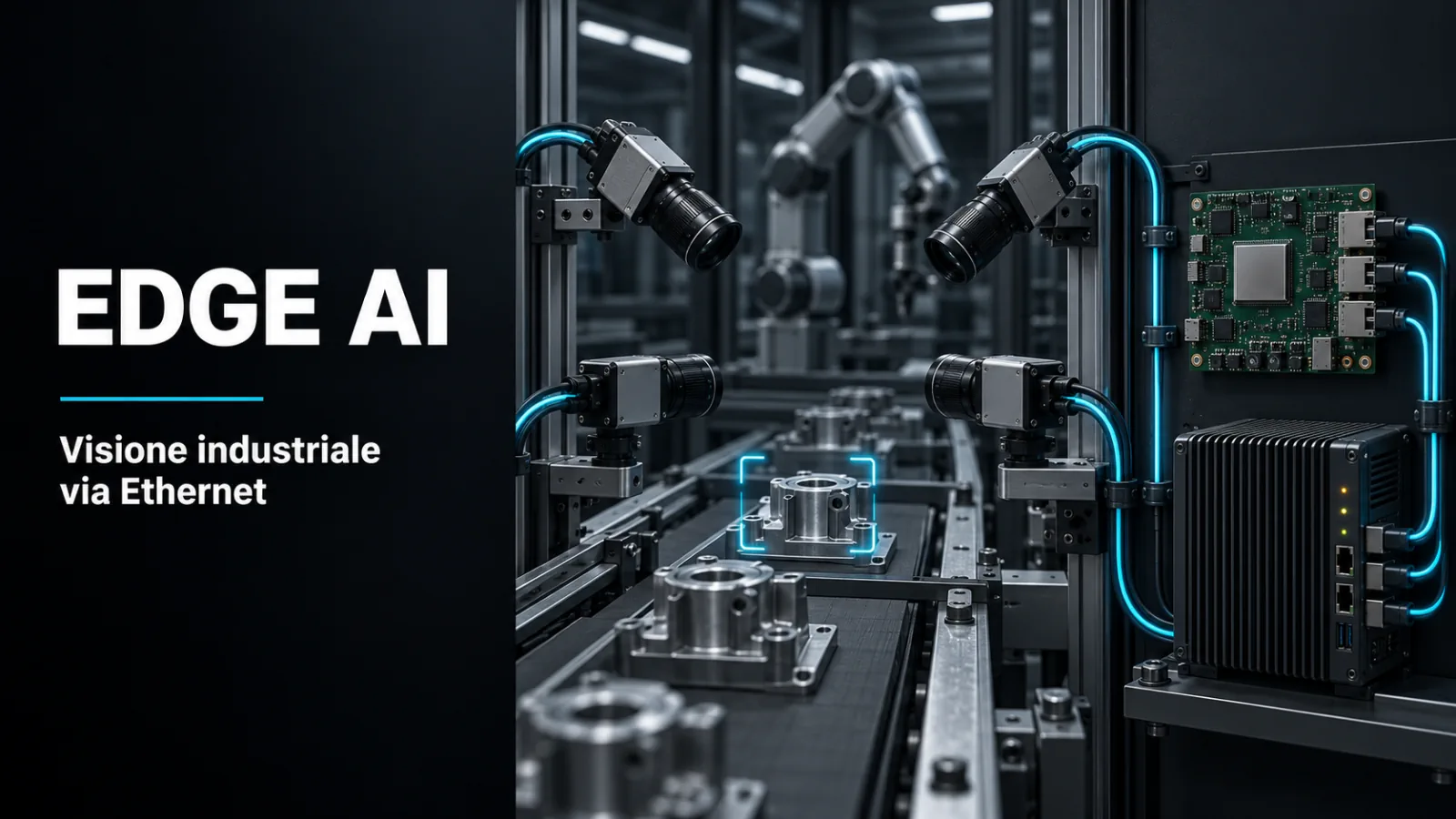
Microchip’s PolarFire Ethernet Sensor Bridge Rev 2.0 supports up to four MIPI CSI-2 cameras over dual 10GbE. Learn how to assess bandwidth, latency, synchronisation and NVIDIA integration for industrial inspection.
THE NEXT STEP