HMI and interface development for embedded systems
An HMI must explain machine state and guide permitted operations. Flows, roles and error behaviour are defined before visual details. LVGL is considered for MCU platforms; Qt and QML for systems with different resources and requirements. Presentation remains separate from control logic.
Activities and verification
Design screens, navigation, parameter editing and action confirmations.
Integrate firmware, field buses, APIs and the data model.
Test readability, responsiveness, memory and recovery after disconnections or restarts.
Initial decisions and integration
Tools follow the display, operating system, memory, libraries and existing code. I work with firmware, machine-control and design teams to define data ownership, permitted commands and interface behaviour when the system is busy or disconnected.
A verification example
A verification scenario includes a parameter change, controller confirmation, communication loss and reconnection. The operator should distinguish requested values, confirmed values and stale data. Navigation and messages are also checked at the intended display resolutions.
Deliverables and acceptance criteria
Implemented screens, reusable components, data interfaces and verification scenarios. Resolution, refresh timing and behaviour when controller communication is unavailable are agreed explicitly.
Where to start
Bring display and board specifications, example parameters and alarms, operator profiles and real operating sequences.
Can we retain our current graphics library?
I treat it as part of the starting context. A framework change is assessed for specific needs, compatibility and maintenance rather than as an automatic requirement.
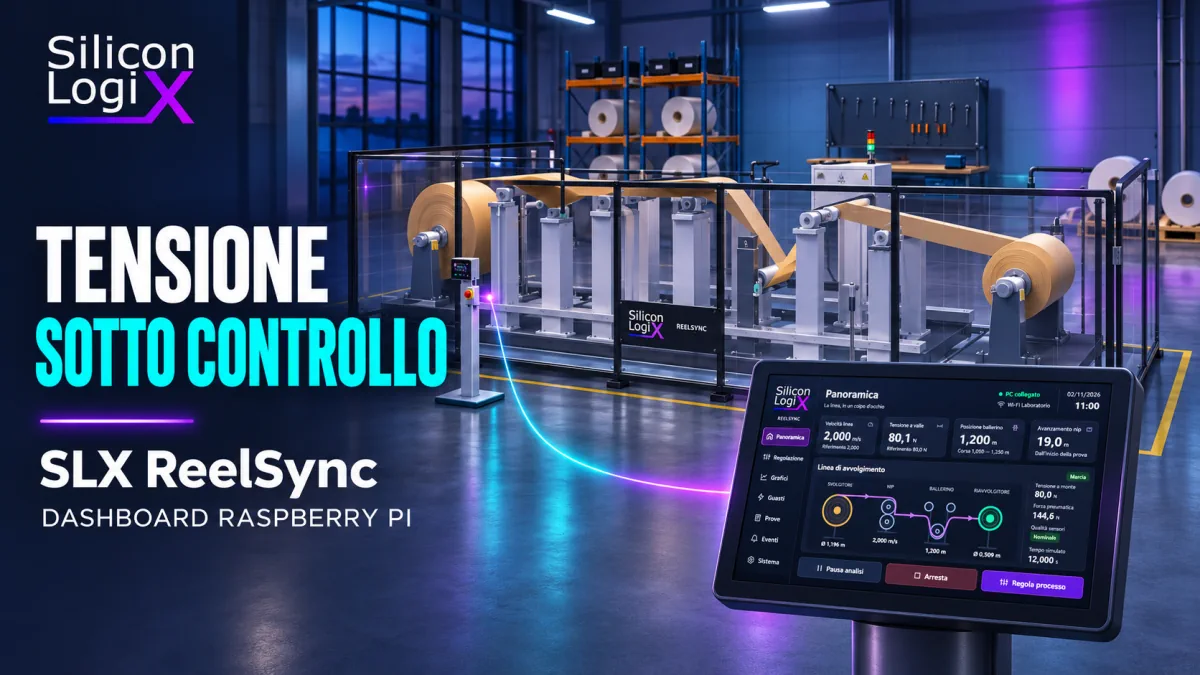
SLX ReelSync connects a Raspberry Pi LVGL dashboard to a virtual winding line: embedded Linux, TLS over Wi-Fi, contextual alarms and repeatable fault tests.
C++20 / LVGL 9.5 / Linux / Buildroot / Raspberry Pi 3 A+ / TLS 1.3 / WebSocket / OpenGL
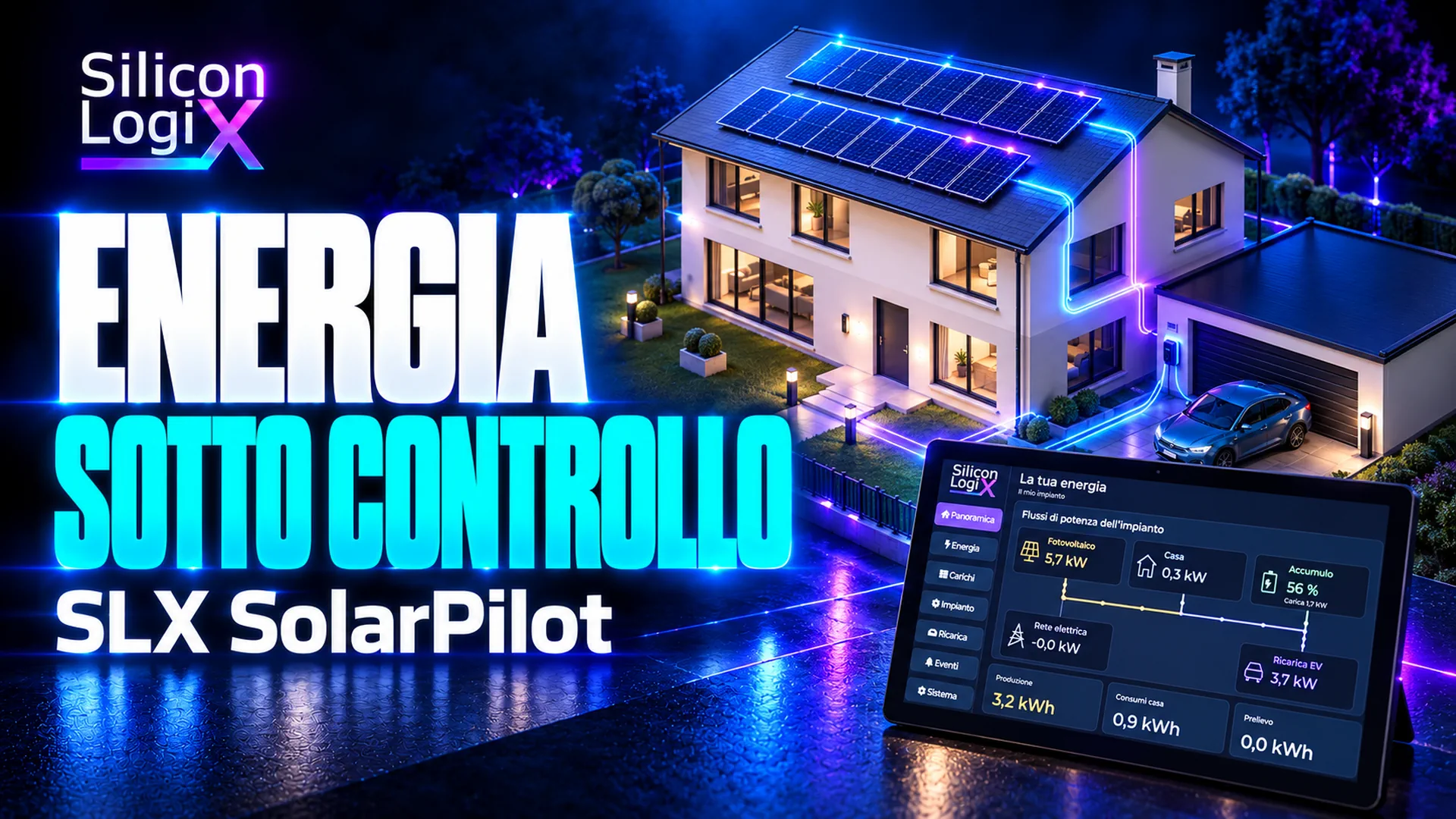
SLX SolarPilot connects a Linux/LVGL touch controller to a residential plant simulated in 3D: photovoltaics, storage, appliances and EV charging with EEBUS and SunSpec Modbus TCP.
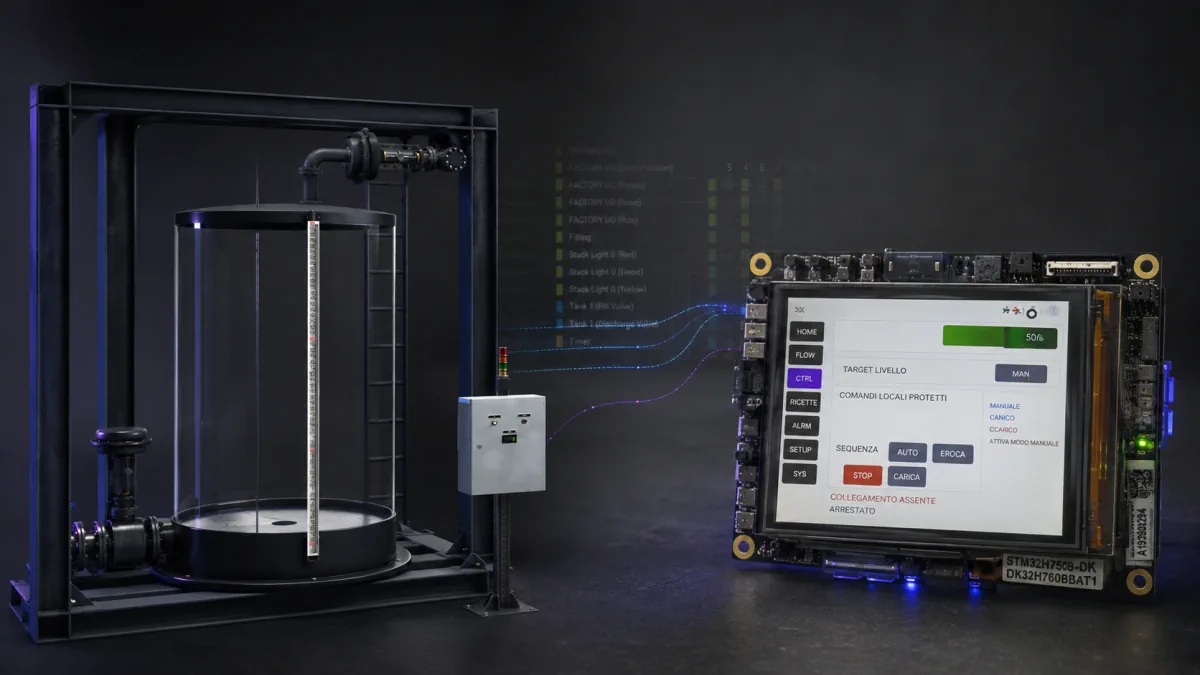
SLX FlowControl shows industrial HMI development on an STM32H750B-DK: FreeRTOS real-time control, Modbus TCP/IP and a Factory I/O digital twin for checking sequences, alarms and diagnostics before machine integration.